A wide-ranging set of policy changes takes effect in Uzbekistan on September 1, 2026, including higher wages and stipends, new subsidies in select sectors, and revised rules for paying bus fares and cracking down on fare evasion. The changes also introduce new support mechanisms for children with special educational needs and for livestock breeding.
Public-sector wages and stipends to rise 7%
Starting September 1, 2026, wages and stipends for public-sector employees will increase by 7 percent. The minimum monthly wage will be set at 1.36 million soums, with the base calculation unit rising to 440,000 soums. The additional costs will be covered through the state budget.
Agency to take over authority for select agricultural subsidies
Starting September 1, authority over certain subsidies from the State Fund for Supporting Agriculture will shift to the Agrarian Payments Agency. This includes a mechanism to partially reimburse farms for the value of electronic invoices on raw cotton sold through the commodity exchange. The agency will also take over subsidies that reimburse cotton-textile clusters and yarn-producing textile enterprises for a portion of the cost of raw cotton purchased with their own funds.
New Family Doctor-style support model for children with special needs
Starting September 1, Uzbekistan will introduce a case-management system connecting children with special educational needs to education, social assistance and other services. Child assessment teams operating under "Inson" social service centers will evaluate the educational needs of children ages 3 to 18 and refer them to appropriate state education institutions.
Private education providers offering general secondary education through specialized correctional classes will receive a per-student subsidy: 4.84 million soums in Tashkent, 4.18 million soums in provinceal capitals and the city of Nukus, and 3.74 million soums in other districts and cities.
Drinking water projects to move onto a digital tracking platform
From September 1, all drinking water and wastewater infrastructure projects handed over to Uzsuvtaminot JSC will be managed through a dedicated electronic platform, streamlining certain contractual relationships between the utility and its subsidiary enterprises directly. The move is also designed to attract greater loan and grant financing from international financial institutions and foreign government development agencies for new projects. Authority to approve tariffs for drinking water and wastewater services will transfer to the Interagency Tariff Commission under the Cabinet of Ministers starting January 1, 2027.
Poultry projects to get loans at 10% interest
From September 1, poultry farms, producers of compound feed for poultry, and "ready-made business" ventures will be eligible for loans at an annual rate of 10 percent — applicable only to newly issued loan agreements. The financing will be channeled through Mikrokreditbank using funds from the Reconstruction and Development Fund, with the aim of bringing new poultry production capacity online.
Subsidies for pedigree cattle breeding
Between September 1, 2026, and January 1, 2030, breeding farms will receive subsidies to help offset the cost of raising identified pedigree female cattle kept for breeding purposes. The funds will be disbursed by the Agrarian Payments Agency from the state budget: 1.5 million soums for a first pedigree female calf, 2 million soums for a second, 1 million soums for keeping a calf to 12 months old, and an additional 1 million soums for keeping it from 12 to 18 months.
Bus fares to be paid upon boarding
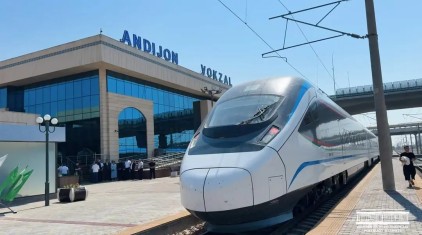
From September 1, passengers on city buses operating under gross-cost contracts will be required to pay their fare at the moment they board, using a transport card tapped on a validator, a bank card, a smartphone, or another contactless payment method. Passengers entitled to discounted or free travel will likewise need to validate their transport or social card upon boarding. Anyone who fails to pay the fare or validate an exemption will be considered to be riding without a ticket.
Crackdown on fare evasion to step up
Beginning September 1, inspectors from the Transport Control Inspectorate and the state agency overseeing urban passenger transport will step up enforcement against fare evasion, including checks conducted directly inside buses. Riding without a valid fare currently carries a fine equal to one-tenth of the base calculation amount — 41,200 soums — though proposals to raise this fine have been submitted to the Legislative Chamber.
New support system for trafficking survivors at the local level
Beginning September 1, a system will be introduced through "Inson" social service centers to assess the situations of human trafficking survivors and connect them with appropriate services at the neighborhood (mahalla) and district level.
In addition, the Republican Center for the Rehabilitation of Women and Children, along with its provinceal branches, will begin admitting and providing services to women who are trafficking survivors and their minor children. An additional 40 places will be created at provinceal centers in Karakalpakstan, and the Kashkadarya, Samarkand and Fergana provinces.
Stay up to date with all the latest news: