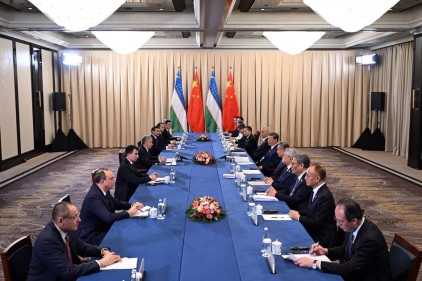
Ahead of the Shanghai Cooperation Organisation summit, which Kyrgyzstan is hosting, the President Shavkat Mirziyoyev met with Chinese President Xi Jinping today in Bishkek.
According to Mirziyoyev's press service, the two leaders discussed a broad range of issues, agreeing to continue systematic strategic dialogue between the foreign ministries and deepen inter-parliamentary ties. Uzbekistan reaffirmed its consistent support for the "One China" policy and for a firm stance against the Three Evils — separatism, extremism and terrorism.
Trade and investment featured prominently in the talks. Bilateral trade turnover approached $18 billion last year, and the two sides expressed confidence it would keep growing, proposing a new target of $30 billion in the coming years. To get there, the countries plan to keep expanding mutual deliveries of industrial and agricultural goods and ensure Uzbek companies take a more active role in trade fairs held in China. The portfolio of active joint investment projects between the two countries now stands at nearly $60 billion, with more than 6,000 joint ventures currently operating in Uzbekistan.
The two leaders identified promising areas for industrial cooperation, including energy, chemicals, metallurgy, construction materials, food production, transport and infrastructure, agriculture and high technology, while flagging the digital economy, mining, and the development and processing of mineral resources as expanding "growth points." As one flagship example of technological partnership, they highlighted cooperation with BYD on electric vehicle manufacturing and backed plans to boost production capacity and localization. Chinese companies were invited to take a more active role in setting up manufacturing operations within joint industrial zones across Uzbekistan's regions, and both sides expressed interest in deepening ties with major Chinese financial institutions and expanding their involvement in projects inside Uzbekistan.
Energy cooperation also drew high marks from both leaders. Uzbekistan said it wants to expand partnerships in both conventional and alternative energy and to bring Chinese companies into peaceful nuclear projects. Interregional exchanges are flourishing, with all of Uzbekistan's provinces now engaged in active cooperation with Chinese provinces on numerous joint projects; a third regional forum was held in Xi'an in May.
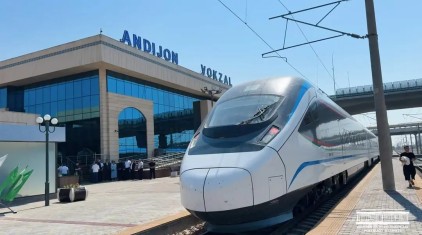
Transport connectivity was another focus, with both sides noting steady progress on construction of the China-Kyrgyzstan-Uzbekistan strategic railway, which they expect to become a key link in the Eurasian transport network and to further strengthen connectivity under the Belt and Road Initiative.
The talks also touched on expanding tourism and cultural exchange. A visa-free regime is already in place, and the two sides discussed plans to expand air routes and increase flight frequency between cities in both countries. Work is underway to open Uzbek and Chinese cultural centers, with Days of Uzbek Culture planned in China by the end of the year; the sides also proposed adopting a cultural events program for 2027-2029.
Cooperation in science, education and workforce training has become a regular feature of the relationship, with continued development of Luban Workshops, Confucius Institutes and joint educational projects in Uzbekistan's regions. Both sides expressed interest in expanding Chinese-language instruction, broadening joint academic programs between universities, and increasing quotas for Uzbek students to study in China.
Space exploration was named among the promising future areas of cooperation, along with deepening the "China-Central Asia" regional partnership format and preparing for its third summit, to be held in China next year.
Mirziyoyev arrived in Bishkek ahead of the meeting. He is scheduled to hold a series of bilateral meetings on August 31 and attend the opening ceremony of the 6th World Nomad Games.
Stay up to date with all the latest news: