Electricity has become an essential part of everyday life. It powers homes, businesses, schools, hospitals, transport systems, and digital infrastructure, making it one of the foundations of modern society. A reliable energy supply is therefore critical not only for economic growth but also for improving people's quality of life.
As Uzbekistan's economy continues to expand, so does its demand for electricity. Population growth, rapid urbanization, the development of new industries, and the widespread use of modern technologies and household appliances have all contributed to a steady rise in energy consumption.
Meeting this growing demand requires more than simply producing additional electricity. It calls for a modern, resilient energy system capable of supporting the country's long-term development. Recognizing this need, Uzbekistan has embarked on a comprehensive programme of energy sector reforms focused on expanding generation capacity, modernizing infrastructure, attracting private investment, and accelerating the transition to renewable energy. The ultimate objective is to ensure a stable, efficient, and sustainable electricity supply for consumers across the country.
Why Reform Was Needed
For many years, Uzbekistan's energy sector faced mounting pressure. As demand continued to increase, weaknesses within the existing system became more visible. During the autumn and winter months, power outages and interruptions to natural gas supplies in some regions affected both households and businesses, highlighting the need for significant investment and modernization.
A large part of the challenge lay in the country's aging infrastructure. Many power plants and electricity transmission networks were built decades ago and were no longer able to meet the requirements of a rapidly growing economy. At the same time, expanding cities, new residential developments, and industrial growth placed ever-greater demands on the electricity grid, stretching existing capacity to its limits.
Reliable access to energy is now widely recognised as a prerequisite for sustainable economic development. Without it, it becomes more difficult to attract investment, expand industrial production, create jobs, and raise living standards. This is why modernising the energy sector, increasing generation capacity, and diversifying energy sources have become central priorities of Uzbekistan's development strategy.
The reforms underway are intended not only to resolve today's challenges but also to strengthen the country's long-term energy security and economic resilience. They are also aligned with a broader global shift towards cleaner and more sustainable sources of energy.
The Role of Renewable Energy
Renewable energy has become one of the fastest-growing sectors of the global energy industry. Resources such as solar, wind, hydropower, and biomass offer a sustainable alternative to conventional fossil fuels, which are finite and gradually becoming more difficult and costly to extract.
Beyond ensuring a long-term energy supply, renewable energy delivers important environmental benefits. Unlike coal, oil, and natural gas, renewable technologies generate little or no greenhouse gas emissions during electricity production. This helps improve air quality, reduce environmental pollution, and support efforts to address climate change.
Renewable energy also strengthens energy security by reducing dependence on fossil fuels and creating a more diverse and resilient energy mix. A broader range of energy sources makes countries less vulnerable to fluctuations in global fuel prices or disruptions to supply.
Uzbekistan has made renewable energy a key pillar of its energy strategy. The rapid development of solar and wind power projects is already increasing electricity generation while reducing natural gas consumption and lowering emissions. These investments are helping the country meet growing demand for electricity while supporting both economic development and environmental sustainability.
As countries around the world continue to transform their energy systems, renewable energy is expected to play an increasingly important role. For Uzbekistan, expanding clean energy capacity represents not only an environmental commitment but also an investment in long-term energy security, economic competitiveness, and sustainable growth.
Green Energy Reaches a Historic Milestone: Renewables Overtake Coal
The global energy sector reached a historic turning point in 2025. For the first time in more than a century, renewable energy sources generated more electricity than coal. The milestone marks not only a major shift in the global energy mix but also an important step forward for climate action and sustainable development.
According to international energy analysts, renewable sources accounted for 33.8% of global electricity generation in 2025, while coal's share fell to 33%. This is the first time since 1919 that renewables have surpassed coal as the world's largest source of electricity generation.
History offers an interesting perspective. In the early twentieth century, hydropower briefly gave renewable energy a larger share of electricity generation than coal. However, rapid industrialisation soon made coal the dominant fuel, a position it maintained for almost a century.
Over the past decade, that balance has shifted dramatically. In 2015, renewables accounted for 23% of global electricity generation. By 2025, their share had risen to 33.8%—an increase of almost 11 percentage points in just ten years.
Much of this growth has been driven by the rapid expansion of solar and wind power. Large-scale renewable energy projects in China, Europe, and the United States have significantly increased clean electricity generation, while falling costs for solar panels, wind turbines, and battery storage technologies have made renewable energy increasingly competitive.
In 2025, renewable energy sources generated approximately 10,730 terawatt-hours (TWh) of electricity, compared with 10,476 TWh from coal-fired power plants. Coal generation also declined by 63 TWh during the year, marking its first annual decrease since the post-pandemic recovery.
Even so, this milestone does not signal the end of the fossil fuel era. Natural gas and other fossil fuels continue to play a significant role in global electricity generation, accounting for 24.4% of total output in 2025. Taken together, fossil fuels still generate more electricity worldwide than renewable energy.
Nuclear power also continues to contribute to the global energy mix, although its share has gradually declined over time and now stands at around 9%.
Energy experts note that the continued expansion of renewable energy is accelerating the decarbonisation of electricity systems around the world. By reducing greenhouse gas emissions, renewables are helping countries tackle climate change, improve air quality, and strengthen environmental sustainability.
While fossil fuels remain a major part of the global energy landscape, the rapid pace of renewable energy development suggests that this balance will continue to evolve in the years ahead. Uzbekistan is among the countries actively contributing to this transition.
Green Energy: A New Pillar of Uzbekistan's Energy Sector
A reliable energy sector is fundamental to both economic growth and public well-being. As electricity demand continues to rise alongside industrial development and population growth, diversifying energy sources and improving efficiency have become increasingly important. In Uzbekistan, reforms aimed at expanding renewable energy are already delivering tangible results.
Today, the country operates 157 power plants with a combined installed capacity of 27,343 megawatts (MW). Thermal power plants still account for the largest share of generating capacity, but hydroelectric, solar, and wind power are expanding rapidly. Solar power capacity has reached 3,930 MW, while wind power capacity stands at 1,652 MW. Battery energy storage systems now provide an additional 1,545 MW, reflecting the growing role of clean energy in Uzbekistan's electricity system.
From the beginning of the year to 15 June, Uzbekistan's power plants generated 42.2 billion kilowatt-hours (kWh) of electricity. This represents an increase of 2.3 billion kWh—or 6%—compared with the same period last year, demonstrating that the country's generating capacity is expanding alongside rising demand.
The strongest growth has come from renewable energy. During the same period, hydroelectric, solar, and wind power plants generated 9.8 billion kWh of electricity, up 23% year-on-year. The increase highlights the increasingly important role that renewable energy is playing in the national power system.
According to experts, the expansion of renewable energy is doing more than increasing electricity generation. It is also reducing Uzbekistan's reliance on natural gas. In May 2026 alone, large-scale solar and wind power plants generated more than 1.231 billion kWh of electricity. This made it possible to save approximately 328 million cubic metres of natural gas while preventing around 707,000 tonnes of harmful emissions from entering the atmosphere.
These figures also underline the environmental benefits of the country's energy transition. At a time when the world faces growing challenges related to climate change, air pollution, and the depletion of natural resources, investing in renewable energy is no longer simply an economic choice—it has become an environmental necessity. Uzbekistan's efforts are closely aligned with global trends towards cleaner and more sustainable energy systems.
Most importantly, renewable energy projects are delivering benefits that extend well beyond additional electricity generation. They are strengthening the country's energy security, reducing pressure on finite natural resources, and supporting long-term environmental sustainability. Expanding renewable energy is therefore not only a response to today's energy needs, but also a strategic investment in the well-being of future generations.
The Role of Energy Reforms in Uzbekistan's Development
A reliable energy system is essential to every modern economy. It underpins industrial production, transport, public services, and everyday life, making energy security a key prerequisite for sustainable economic growth. In Uzbekistan, the ongoing transformation of the energy sector has therefore become a central pillar of the country's long-term development strategy.
Expanding electricity generation, constructing new power plants, and upgrading ageing infrastructure are helping the country meet steadily growing demand for energy. At the same time, reforms aimed at attracting private investment, strengthening international partnerships, and accelerating the deployment of renewable energy are reshaping the sector and creating new opportunities for economic growth. These efforts are enhancing Uzbekistan's investment appeal while supporting the development of new industries and creating jobs.
Ensuring a secure and resilient energy supply has become a strategic priority for countries around the world, and Uzbekistan is no exception. The government is pursuing a broad programme of reforms that includes diversifying the country's energy mix, modernising transmission infrastructure, and improving energy efficiency across the sector.
The commissioning of new solar and wind power plants, greater utilisation of hydropower resources, and the introduction of battery energy storage systems are all contributing to a more reliable and flexible electricity network. Together, these investments are reducing dependence on natural gas, improving the efficiency of energy use, and strengthening the resilience of the national power system.
The benefits extend beyond energy security. By expanding clean energy generation, Uzbekistan is also reducing greenhouse gas emissions and improving environmental sustainability. In this way, the country's energy reforms are supporting both economic development and its broader climate objectives.
Tashkent International Investment Forum: A Platform for New Partnerships
Uzbekistan's energy transformation featured prominently at the Fifth Tashkent International Investment Forum, where energy was presented as one of the country's key drivers of economic growth and its transition towards a greener economy.
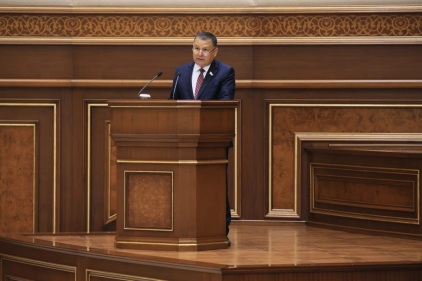
In his address to the forum, the President of Uzbekistan reaffirmed the government's commitment to modernising the energy sector through the construction of new generating capacity, expansion of the national electricity grid, and increasing the share of renewable energy to 54% of total generation.
The forum's dedicated energy pavilion showcased major projects in solar, wind, hydropower, thermal generation, and battery energy storage, alongside initiatives aimed at localising the production of energy equipment and strengthening industrial cooperation. The participation of more than 50 international energy companies and investors highlighted growing international confidence in Uzbekistan as a destination for long-term investment and strategic partnerships in the energy sector.
Uzbekistan's Potential to Become Central Asia's Green Energy Hub
Uzbekistan possesses some of the strongest renewable energy potential in Central Asia. Abundant sunshine throughout the year, vast expanses of available land, and favourable wind conditions provide an excellent foundation for large-scale renewable energy development.
Recent years have seen the commissioning of major solar and wind power projects, increasing cooperation with international investors, and the deployment of modern energy storage technologies. Together, these developments are strengthening Uzbekistan's position as an emerging regional centre for clean energy.
Looking ahead, the country is well placed to expand electricity exports to neighbouring markets, develop a green hydrogen industry, and play a more active role in the region's evolving energy landscape.
Ultimately, Uzbekistan's energy reforms are about more than meeting domestic demand. They are laying the foundations for a modern, low-carbon energy system that supports economic competitiveness, strengthens energy security, and reinforces the country's position as a regional leader in sustainable energy development. As the global energy transition gathers pace, green energy is expected to become an increasingly important driver of Uzbekistan's long-term prosperity.