In January, a schoolboy fell into the water while crossing a pipe in Zhunarik Canal in Tashkent's Sergeli District. A resident appealed to the mayor's office to restore the bridge so that children could safely walk to school. Only two months later, when a video footage of children crossing the pipe appeared on social media, did the mayor's office build the bridge within 24 hours.
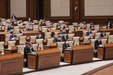
President Shavkat Mirziyoyev cited this example at a government meeting on Friday dedicated to improving the system for handling public complaints and analyzing public opinion.
Deficient handling of complaints reduces public trust in the government, the head of state stated.
Last June, the president criticized the work of public reception centers, launched in 2016 upon his assumption of power. He called them a "dispatch center" that redirected complaints to government agencies. More than half of complaints received in 2024 were not resolved. He announced the replacement of all reception staff with "personnel capable of solving problems," and the management of reception offices was entrusted to provincial and district mayors.
According to data released by the president, there are currently an average of 319 applications and complaints per 10,000 people. However, in some provinces, this figure is significantly higher: 535 in Tashkent, 462 in Navoi Province, 452 in Syrdarya and Surkhandarya provinces, 430 in Jizzakh Province, 368 in Kashkadarya province, and 350 in Tashkent province. In some districts, including the Mirabad District of Tashkent, the number of applications is twice the average.
In some districts, including the city of Namangan, the number of letters has increased by 50% over the year. Meanwhile, nationwide, it has decreased by 16%.
The president noted that several mayors held mobile receptions "for show," speaking with a few individuals in their neighborhoods. He cited the mayors of Bukhara, Karmana, Uchkuduk, Sardoba, Khavast, and Bostanlyk districts, as well as the cities of Angren and Gazgan.
This year, 56 trillion soums have been allocated to improve the lives of neighborhood residents, Shavkat Mirziyoyev noted, asking, "Let ministers and mayors ask themselves: with so many opportunities, are they able to promptly resolve the problems raised by the public?"
He said that the public reception offices, created nine years ago to bring government agencies and the people closer together, were once effective. But now it was time to change the way these structures operate in accordance with individuals' demands.
Every district, city, and provincial governor, minister, and head of a provincial organization must make the motto "I must know the problem of every person and every family and provide timely assistance" their primary rule, the president declared.
Shavkat Mirziyoyev reported that after mayors became responsible for appeals, in several provinces—Karakalpakstan, Khorezm, Andijan, Kashkadarya, and Syrdarya—the number of appeals decreased by 25-30%, and 60-70% of the problems raised by the public were resolved. In other provinces and individual ministries, no significant changes have yet been observed, he stated.
In Tashkent, more than half of the 170,000 appeals remain unresolved, as do more than half of the 110,000 in the Tashkent province. In the Surkhandarya and Samarkand provinces, as well as the capital, the number of repeat appeals has increased.
The majority of appeals last year concerned the police agencies – 148 thousand, the Bureau of Compulsory Enforcement – 134 thousand, the Ministry of Energy – 88 thousand, the Ministry of Employment and Poverty Reduction – 60 thousand, and the Ministry of Health – 56 thousand, the president concluded.