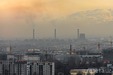
Average concentrations of PM2.5 particles in Tashkent’s air fell 28% and PM10 particles 32% from the start of 2026 through Oct. 19 compared with the same period last year, said Doniyor Turgunov, director of the Hydrometeorological Research Institute.
The gap was wider in autumn, he said. From Sept. 1 to Oct. 19, PM2.5 was down 28% and PM10 down 37%. In the first 19 days of October, the declines were 40% and 56%, respectively.
Air quality was rated “unhealthy” on the international AQI scale on 11 days in the same period last year, but on none this year, Turgunov said. Days when PM2.5 air quality was rated “moderate” or better rose to 38 from 21.
Autumn pollution stems from weather, natural dust and combustion, he said. Temperature inversions trap pollutants over the city, while dust blows in from deserts including the Kyzylkum and Aralkum.
The institute forecasts a daily average PM2.5 level of 37 micrograms per cubic meter on Oct. 21-22, versus 91 and 77 on those days last year, though pollution could briefly rise in the evening and at night. It expects better air quality this autumn and winter than last season but will update forecasts daily because strong inversions can briefly worsen pollution.
Air quality was expected to worsen overnight from Oct. 21 to 22, reaching “unhealthy for sensitive groups” on the AQI, with weak winds, temperatures falling to 8.5 C and a strong inversion.
A Special Commission on improving air quality was set up under a presidential decree dated Nov. 24, 2025. Water sprayers, wheel-washing systems and air monitoring stations were made mandatory at large construction sites. A national “Clean Air” project for 2026-2030 aims to cut atmospheric emissions by 10.5%, transport emissions by 10% and the number of days PM2.5 exceeds limits in Tashkent by 35% by 2030.