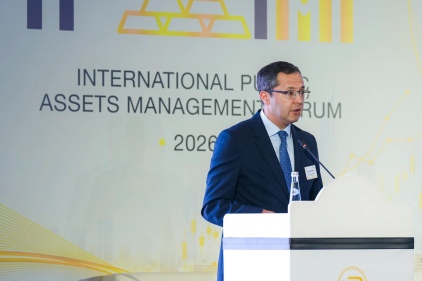
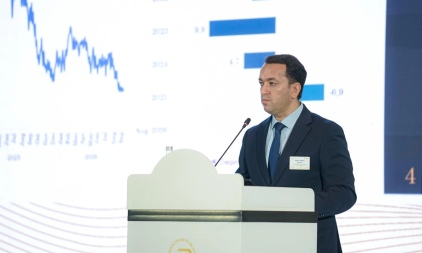
The Fiscal Analysis Institute, operating under the Ministry of Economy and Finance, presented a set of proposals for the country's key tax policy directions for 2027 to public discussion at a Fiscal Dialogue session held on July 30.
According to Fazliddin Shamsiev, chief specialist at the Institute's Department for Analysis of the Shadow Economy, Tax and Customs Administration, the proposals were developed based on research conducted by the Institute's specialists.
Base tax rates to remain unchanged
According to the Institute's calculations, it would be advisable not to change the base tax rates in 2027. Accordingly, it proposes keeping the following rates in place:
- corporate profit tax — 15%;
- personal income tax — 12%;
- value-added tax (VAT) — 12%.
The Institute also recommends indexing fixed tax rates in line with inflation — roughly 5–6% — and announcing any such changes at least three years in advance.
A progressive scale for income tax
The Institute is also proposing a shift, over the medium term, to a progressive personal income tax system.
Specialists argue that the flat 12% rate in place since 2019 no longer fully aligns with principles of tax fairness, given rising income levels.
A proposed 5% tax on bank deposit interest
Among its other key proposals, the Institute floated taxing interest income earned on bank deposits. As of May 1, 2026, the volume of individuals' bank deposits stood at 170 trillion soum, according to available data. Central Bank figures put the average deposit interest rate at 16%. The Institute proposes taxing this interest income at a 5% rate — the same rate applied to dividends.
According to its estimates, this could bring in an additional 1.4 trillion soum in state budget revenue. The Institute's specialists also pointed to the fact that most developed countries already tax interest income from bank deposits.
Proposal to scrap the 1% cashback program
The Fiscal Institute argues that the 1% tax cashback program has already achieved its original purpose — encouraging the public to demand receipts — and has become an increasingly costly line item for the state budget. If the current system remains in place, it would require an allocation of 2.1 trillion soum in 2027. The Institute is therefore proposing the following approach:
- eliminate the 1% cashback for the general public;
- retain the 12% VAT cashback on select food products for needy families registered in the Social Registry;
- introduce large-prize targeted lotteries to encourage receipt collection.
Such a system could cut related state spending roughly twentyfold, operating on a budget of around 100 billion soum.
5 trillion soum in additional revenue expected from improved VAT efficiency
The Institute reports that the current VAT efficiency ratio stands at 57%. In 2027, it plans to raise that figure to 63% by fully automating and digitizing the VAT refund process and strengthening risk-based oversight.
By its estimates, this could generate an additional 5 trillion soum in state budget revenue.
Profit tax for select sectors could drop from 20% to 15%
Banks, mobile network operators, polyethylene granule manufacturers, and market and trade complex operators currently pay profit tax at a 20% rate. Drawing on international experience, the Institute proposes applying a single unified rate of 15% across all enterprises. This change would cost the budget an estimated 859 billion soum in forgone revenue.
The Institute noted that this shortfall could be offset by applying VAT to certain bank commission services — specifically, it proposes taxing services such as account maintenance, cash handling, currency exchange, and bank card servicing.
Excise tax on alcohol could rise
The Institute proposed raising the excise tax rate on alcoholic beverages from 48,000 to 70,000 soum. At the same time, it recommended introducing a VAT-style crediting mechanism, noting that under the current system, domestic producers bear a heavier tax burden than importers.
Under the proposed mechanism, excise tax pre-paid on ethyl alcohol would later be deducted from the final excise amount owed. This would reduce the tax burden on domestic producers while ensuring imported products are taxed at the full rate.
Social tax break has fallen short of expectations
The Institute also discussed the results of an analysis focused on the public catering sector. It found that only about 30% of businesses have taken advantage of the reduced social tax rate — cut from 12% to 1%. Moreover, nearly 80% of the benefit has gone to just 10% of enterprises. The Institute concluded that the incentive has failed to deliver its intended effect of boosting formal employment.
A unified social payment proposed for the self-employed and sole proprietors
The Institute also proposed closing the wide gap between individual entrepreneurs and self-employed citizens. Currently, sole proprietors pay a monthly social contribution equal to one base calculation unit (BCU), while self-employed individuals may pay just one BCU per year.
The Institute is proposing a single unified rate for both categories, pegged to the social payment amount tied to the minimum wage.
A carbon tax could be introduced starting in 2028
The Institute also proposed a phased rollout of a carbon tax for large industrial enterprises.
Under the plan, 2027 would serve as a preparatory phase, during which a greenhouse gas inventory would be conducted and the tax base and rates developed. The carbon tax itself would take effect in 2028, with its scope and rates gradually expanded through 2029–2030.
Concerns raised over the shadow economy
During the discussion, tax adviser Murod Muhammadjonov responded to the Institute's proposals, arguing that the primary focus should not be on adjusting tax rates, but on mechanisms to shrink the shadow economy.
He noted that in some sectors, more than 90% of businesses operate informally, and said the proposals presented did not sufficiently address concrete mechanisms for bringing them into the formal economy.
Muhammadjonov said that before raising the tax burden or eliminating existing incentives, a deeper analysis is needed of the factors currently discouraging businesses from moving into the formal sector