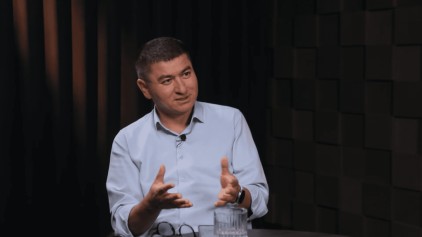
Uzbekistan has renewed the membership of the Public Council for Supporting Entrepreneurship under the President, adding finance and economy blogger and civic activist Otabek Bakirov alongside business leaders Laziz Hamidov, Dinara Islomova and Lola Mirzaeva. Prominent businessmen Zafar Hoshimov, Farhod Mamajonov, Jahongir Ortikhojaev and Murod Nazarov will continue serving on the 40-member body, whose new lineup was confirmed by presidential decree on August 27.
The council, established in 2022 and last refreshed in December 2024, is set to gain real teeth: under a law signed August 17 and taking effect November 18, any draft legislation touching the rights of business entities must now pass through the council's review before the Ministry of Justice conducts its own legal vetting — formally inserting the body into the lawmaking process for the first time.
Bakirov's inclusion is the appointment drawing the most attention. A blogger and the author of a widely followed Telegram channel, he has built a public profile over the past two years as one of the sharpest and most persistent critics of Uzbek economic policies — weighing in on energy tariffs, subsidy schemes, customs duties, state-owned enterprises and IMF tax recommendations, often naming officials and institutions directly. His running critique of the energy sector put him in direct conflict with Energy Minister Jurabek Mirzamahmudov, who filed a complaint against him in late 2024; Tashkent police declined to open a criminal case. Bakirov has said his criticism targets unresolved problems in the sector rather than any individual official.
That history is precisely why his appointment to a presidential advisory body has struck some observers as more than a routine reshuffle. Bringing outspoken critics inside state structures is a familiar pattern in systems where independent institutions are thin: a council seat confers status and access, but it also comes with the unwritten expectation that a member moderates public criticism of the government they now formally advise. Whether that is the intent here or simply a genuine effort to broaden the council's expertise is not something that can be established from the decree itself — Uzbek officials have not addressed the appointment in those terms.
By institutionalizing its most vocal detractors, the government has created a powerful filter for future business laws—but potentially at the cost of erasing the country's final frontiers of independent economic dissent.
Whether that verdict proves accurate will likely become clear only over time, as Bakirov's council seat gives him a formal channel to raise the same concerns from inside the system — or, as skeptics suspect, quietly retires him as one of the more consistent independent voices on economic policy in Uzbekistan's public conversation.
Stay up to date with all the latest news: