President Shavkat Mirziyoyev has signed a decree strengthening legal protections for individuals and businesses caught up in criminal proceedings, implementing stricter deadlines, financial penalties for delays, and a clearer mechanism for compensating those wrongly prosecuted — a package of reforms drawn directly from complaints raised by entrepreneurs at the president's annual open dialogue with the business community.
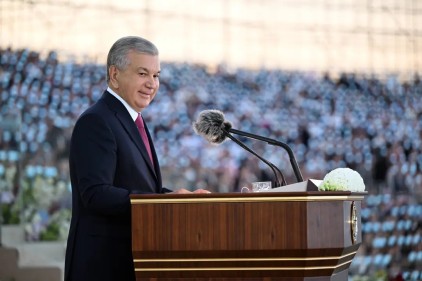
The decree, signed on August 27, follows Mirziyoyev's open dialogue with business leaders held in Khiva, Khorezm province, ahead of Entrepreneurs' Day on August 20 — an event that drew participants from across the country, including roughly 25,000 who joined online. It is the latest in a series of measures to emerge from the annual dialogues, which since their launch have produced 84 laws and 861 decrees and resolutions addressing problems raised directly by business owners.
A history of fear now being confronted
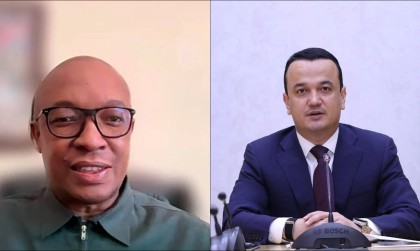
The new rules speak to a long-standing grievance among Uzbek business owners: the risk of aggressive, sometimes unwarranted, criminal investigations disrupting or destroying businesses. At this year's dialogue, prominent businessman Jahongir Ortiqxo'jayev spoke publicly about the anxiety business owners lived with in years past, when so-called "mask shows" — raids by masked law enforcement officers — made the very word "entrepreneurship" synonymous with fear rather than opportunity. His remarks, delivered in a televised interview following the dialogue, underscored why the government has increasingly framed legal protections for business as central to its economic reform agenda.
Mirziyoyev's decree is designed to translate that political commitment into enforceable procedure.
Faster, penalized bail returns
Under the new rules, the process for returning bail deposited in connection with a criminal case will be significantly simplified and accelerated. Court orders directing the return of bail will now be classified among rulings requiring immediate enforcement, eliminating the delays that previously left funds tied up in bureaucratic limbo even after a court had ruled in a defendant's favor.
Should an agency fail to return bail within the legally mandated timeframe, it will now face a financial penalty: interest will accrue on the outstanding amount for every day of delay, calculated at the Central Bank's interest rate. The provision effectively puts a cost on institutional foot-dragging, giving agencies a direct financial incentive to comply promptly with court orders.
Compensation restructured through Finance Ministry channels
The decree also restructures how the state handles compensation in cases where courts order funds returned to individuals or business owners. Where money has been collected in favor of the state budget as compensation for damages but a court later rules that it should be returned, the Ministry of Economy and Finance will now be responsible for issuing that repayment directly from state budget resources — removing ambiguity over which agency bears responsibility for reimbursement.
For individuals who are rehabilitated — that is, cleared of charges after having suffered financial or moral harm during prosecution — compensation will be paid out by the Finance Ministry from a dedicated republican fund established to cover property damage suffered by individuals and legal entities at the hands of the state.
Crucially, the decree sets a hard deadline for compliance: if a legally binding court ruling ordering such compensation is not enforced within 10 working days of taking effect, the unpaid portion will begin accruing interest at the Central Bank's base rate — the same penalty mechanism applied to delayed bail returns, reinforcing a consistent standard of accountability across the system.
A law to follow within three months
The decree does not stop at administrative fixes. It instructs relevant government agencies to draft, within three months, a full piece of legislation that would formalize these procedures in law and establish broader protections for business entities against unfounded criminal prosecution — signaling that Sunday's measures are intended as a first step rather than a final one.
Taken together, the reforms reflect a broader pattern in Uzbekistan's governance under Mirziyoyev: using direct, public engagement with entrepreneurs as a pipeline for legal and institutional reform, with an increasing focus on ensuring that businesspeople who are investigated, prosecuted, or ultimately cleared are not left to bear the financial and reputational cost of a slow-moving state.
Stay up to date with all the latest news: