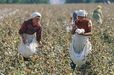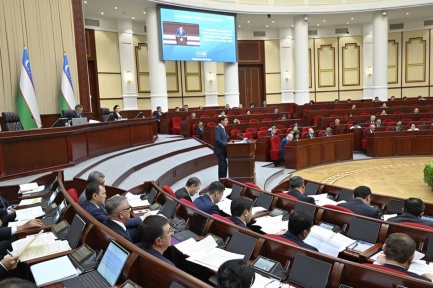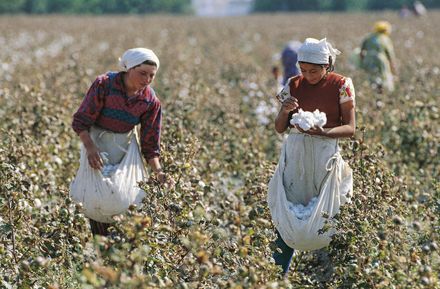
Uzbekistan has announced new support measures for cotton growers, agro-industrial clusters and exporters of finished textiles, as weaker global demand for cotton and higher logistics costs weigh on the sector. President Shavkat Mirziyoyev announced the measures on Sept. 24 at a meeting in Andijan.
Farmers who sell cotton through the exchange, and the clusters that buy it, will each receive a subsidy of 500,000 soums per tonne. Clusters that grow cotton on their own land will be eligible for 1.5 million soums per hectare.
The relevant agencies have also been instructed to submit calculations for compensating part of the interest on exporters' loans over three years. Under the proposal, exporters would be compensated for interest above 5% on foreign-currency loans and above 14% on local-currency loans.
Authorities will also draw up proposals for refunding 3% of the value of goods sold through online marketplaces.
Global cotton production in the 2026/27 season is expected to reach 26.2 million tonnes, slightly above projected consumption of 25.9 million tonnes. However, early-season risks, including unstable weather and the spread of pests, could erode that surplus as the harvest progresses, according to the September issue of Cotton This Month, published by the International Cotton Advisory Committee (ICAC).
The government has previously moved to support the textile industry as external conditions deteriorated. A meeting in August 2025 heard that global cotton prices had fallen from about $3,000 to $1,500 per tonne over three years. Officials also reported cotton subsidies and an extension of concessional loans for the sector at that time.
Orchards on foothill land
The meeting also presented new measures to bring adyr lands, hilly foothill terrain, into agricultural use in the Jalaquduq, Marhamat, Asaka and Andijan districts.
A dedicated company, Agrostar, will be set up for the purpose. Authorities plan to bring water to 4,000-5,000 hectares by spring and begin planting commercial orchards of peaches, cherries, apricots and plums.
The orchards will be planted and maintained for three years, then offered to residents ready-made. The project has been allocated $30 million, with a further 200 billion soums earmarked for delivering water to the adyr areas.
Plans to nearly double fruit and vegetable processing
Andijan province currently processes about 16% of the fruit and vegetables it grows. Authorities estimate that leasing small processing equipment to residents and creating district brands could lift that share to 30% and raise exports to $500 million.
The government plans to shift fruit and vegetable farming toward a "maximum value per hectare" approach, with 100 billion soums allocated for leasing small processing equipment.
A greenhouse project completed on 5 hectares in Baliqchi district is also to be rolled out nationwide, with 300 billion soums allocated, including 50 billion soums for Andijan province.