The Ministry of Economy and Finance has sharply raised its growth forecast for Uzbekistan's economy in 2026 — from 6.6% to 8.1%. The updated estimates appear in the Fiscal Strategy for 2027–2029.
If the forecast holds, growth would outpace last year's 7.7% and mark the fastest pace in recent years.
Inflation is now projected at 6.5% (down from an initial 7%), with unemployment at 4.5%.
Market services are expected to be the main driver of the economy in 2026, with output projected to grow 16.6% (up from an initial estimate of 14.5%). Industrial production is set to grow 8% (versus 6.4% originally), construction 12.4% (versus 10.2%), and agriculture, forestry and fisheries 5% (versus 4.2%).
The Ministry expects domestic demand to be underpinned by 20% growth in exports excluding gold, a 12.9% increase in fixed capital investment, and remittances continuing to grow at around 10%. The overall fiscal deficit is meanwhile planned to be kept within 3% of GDP.
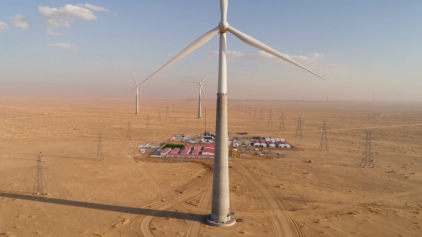
In the industrial sector, electricity generation is planned to reach 93.3 billion kWh, of which 14.3 billion kWh (15.3%) is expected to come from solar and wind power plants. Natural gas production is projected at 25.4 billion cubic meters.
Given the brighter economic outlook, the 2026 consolidated budget revenue forecast has been raised from 515.8 trillion to 589.7 trillion soums — an increase of 73.9 trillion soums, or 14.3%, over the originally approved figure.
Consolidated budget expenditure has been revised upward from 567.7 trillion to 638.4 trillion soums — an increase of 70.7 trillion soums, or roughly 12.5%. Despite the higher spending, the overall fiscal deficit is still projected at 65.4 trillion soums, or 3% of GDP.
The Ministry attributes the growth in budget revenue to expanding production, construction and services, a broader tax base and more taxpayers, higher gold and copper prices, efforts to shrink the shadow economy, and the rollout of risk-based tax oversight.
The additional spending is linked to funding for social and infrastructure programs, as well as strategic projects approved partway through the fiscal year.
Revenue to the state budget proper is expected to reach 439.7 trillion soums for the year — 19% above the approved forecast. VAT receipts are estimated at 93 trillion soums, corporate profit tax at 96.5 trillion, and personal income tax at 49.8 trillion soums. The extra revenue is attributed mainly to strong economic activity and gold and copper prices coming in higher than expected.
After this acceleration in 2026, growth is projected to ease to 6.9% in 2027 under the baseline scenario, before picking back up to 7.1% in 2028 and 7.4% in 2029. Inflation is targeted to fall to 5–6% in 2027 and to 5% in the two years after that.
At a meeting on July 13, President Shavkat Mirziyoyev set a target of raising Uzbekistan's GDP to $240 billion by 2030 — a goal that would require sustaining annual economic growth of 8–9%.
Stay up to date with all the latest news: