In recent years, Uzbekistan’s sports strategy has increasingly relied on a controversial shortcut to international podiums: the rapid naturalization of Russian athletes. Trapped in international limbo due to sweeping bans on Russian teams following geopolitically driven sporting sanctions, many elite Russian competitors have sought alternative flags.
Tashkent has been more than willing to hand them passports. While this strategy delivers immediate medals and global visibility, it raises an uncomfortable question: Is Uzbekistan chasing sporting glory at any cost, and at what expense to its own youth?
On the surface, the math makes sense for sports administrators. Bringing in seasoned, world-class competitors who are already trained to an elite standard guarantees instant competitiveness in Asian and World Championships. For a country looking to project soft power and assert itself as a dominant sporting nation in Central Asia, a medal is a medal, regardless of the athlete's birthplace.
However, this policy creates a dangerous bottleneck for domestic sports development. When a naturalized athlete takes the top spot on a national team, they are not just winning a medal; they are taking away a finite resource. They occupy a roster spot that would otherwise go to a homegrown athlete who has spent years training in local academies.
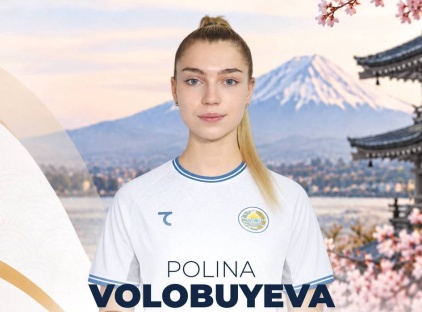
The scale of the trend is hard to pin down precisely; there is no official tally. But Russian media have estimated that more than 350 athletes switched sporting nationality between February 2022 and July 2024, with dozens of them picking up passports from Central Asian states. Uzbekistan's list of recruits now spans several disciplines: Olympic rowing silver medalist Hanna Prakatsen, tennis players Kamilla Rakhimova, Polina Kudermetova and Maria Timofeeva, figure skaters Ekaterina Geynish and Dmitry Chigirev, junior European swimming champion Ilya Sibirtsev, and fencers including Kursk-born foil specialist Polina Volobueva, who has represented Uzbekistan at recent Asian championships.
The consequences of this practice stretch far beyond a single tournament selection:
Young Uzbek athletes, seeing their path to Olympic or international selection blocked by imported veterans, face a psychological barrier. When hard work at home cannot compete with an overnight passport issuance, motivation plummets.
High-performance sports budgets are finite. Funding used to secure, house, and incentivize naturalized athletes is money diverted away from grassroots infrastructure, local coaching education, and regional training centers in provinces outside of Tashkent.
Relying on foreign talent masks structural flaws in domestic training pipelines. A federation can report successful medal tallies to the government while its local development programs are quietly stagnating.
Uzbekistan possesses a deep, historically proven well of athletic potential, particularly in combat sports and weightlifting. The country does not lack talent; it lacks the patience to nurture it to the absolute highest levels across a broader spectrum of sports.
By continuing to act as a competitive refuge for athletes stripped of their own flags, Uzbekistan risks trading its long-term sporting future for short-term podium photographs. If the goal is true national pride, a bronze medal won by a homegrown athlete who rose through the local club system will always carry more weight than a gold medal bought overnight.
Stay up to date with all the latest news: