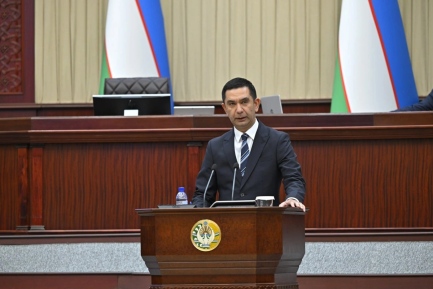
Of the 661,000 Uzbek citizens who returned from labor migration, 557,000 have been engaged in income-generating activity, Minister of Employment and Poverty Reduction Botir Zakhidov told a plenary session of the Legislative Chamber on September 29.
Work is continuing to find jobs for another 70,000 returnees, taking their wishes and preferences into account, he said.
The minister also said 275,000 families were lifted out of poverty in the first four months of this year, while 615,000 people who had been working informally were brought into the formal economy in the first half.
Over the reporting period, 294,000 poor families, or 1.3 million people, received 376,000 services aimed at raising incomes, Zakhidov said. Of the members of these families, 105,000 were placed in permanent jobs, 259,000 were drawn into entrepreneurship and another 12,000 completed vocational training.
To support business initiatives by families in need, 2 trillion soums in loans and 265 billion soums in subsidies were allocated.
In 563 mahallas in border areas and enclaves, 84,000 people were lifted out of poverty through higher incomes, the minister said.
Together with the Ministry of Digital Technologies, 49,000 children from poor families completed free online courses in IT, English, e-commerce, social media marketing and graphic design. Another 125,000 children were enrolled in supplementary classes.
As of July 1, the employed population reached 11.6 million, up 657,000 since the start of the year, according to official data. Zakhidov said 76% of the country's workforce, or 16 million people, are economically active and ready to work.
In the first half, 469,000 people were placed in permanent jobs under a project-based approach, and incomes rose for 2.7 million people. Some 103,000 micro-projects were launched in mahallas over the period, giving 246,000 people a primary or supplementary source of income. In 22,000 of those projects, 30,000 members of poor families took part as entrepreneurs or employees. Another 60,000 micro-projects are planned by the end of the year.
Small and medium-sized businesses received 76 trillion soums in loans in the first half, of which 19 trillion soums came under entrepreneurship support programs.
The state budget has allocated 9 trillion soums this year to improve infrastructure in 1,245 mahallas and 70 districts. Construction is under way at 3,200 sites. In addition, solar panels have been installed in 2,653 households, and another 1,727 homes have been renovated to "green" standards.
New criteria for mayor's assistants
Zakhidov separately addressed the work of mayor's assistants.
"From February to May, senior officials from ministries and agencies traveled to the provinces in working groups and organized training for mayor's assistants. In total, 8,785 assistants completed training, and another 209 of the most promising specialists were sent for advanced training in Japan, Türkiye, China and Russia. We have also implemented a new system for evaluating their performance, which focuses on the quality of work rather than quantity," the minister said.
The main criteria are now the number of sustainable jobs created, the number of families whose incomes have risen and the number of businesses whose operations have stabilized, he said.
By the end of 2026, the authorities plan to place another 583,000 people in permanent jobs, raise incomes for 2 million people and bring 661,000 informal workers into the formal economy.
The government has also set a goal of at least halving the poverty rate in 37 districts and 915 mahallas facing severe socioeconomic difficulties.
The poverty and unemployment rates fell to 4.5% in the first half, according to the minister.
On August 25, Jamshid Kuchkarov told the Legislative Chamber, while commenting on poverty and unemployment figures, that President Shavkat Mirziyoyev had demanded a change in the very approach to assessing the results of poverty reduction.
In August, it was reported that about 1.4 million Uzbek citizens work in nearly 40 countries, roughly 60% of them in Russia. The share of CIS countries in labor migration has declined, while that of European and East Asian destinations has grown.