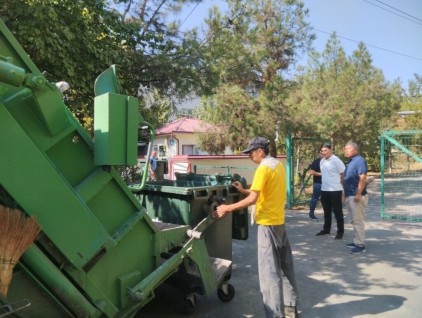
Uzbekistan is carrying out a "40 Days of Action" nationwide cleanup campaign for the Independence Day. Running from July 28 to September 6, the initiative focuses on improving public spaces, ensuring timely waste removal, and boosting overall sanitation standards across the country.
According to the Agency for Waste Management and Circular Economy Development, an average of 4,500 specialized vehicles and more than 10,000 workers are being deployed daily as part of the effort, removing between 30,000 and 40,000 tons of household solid waste per day. Over the full 40-day period, authorities plan to collect and dispose of a total of 1.4 million tons of household waste and 2,000 tons of construction waste.
So far, 7,674 of the country's 8,150 mahallas (neighborhood communities) have been fully covered by the cleanup campaign. To keep equipment running without interruption, 52 of 64 identified vehicle malfunctions have already been fixed, and 12 vehicles have been replaced outright. An additional 155 units of specialized equipment are being held in reserve in case of emergencies.
Ahead of Independence Day, cleaning and beautification efforts have been stepped up at markets, shopping centers, parks and recreational areas. Waste generated by renovation work at schools and preschools is also being cleared as part of the campaign.
Authorities have identified 97 waste-related violations during the campaign, issuing a total of 165.4 million soums in administrative fines. Of 327 complaints received from the public, 275 have already been resolved on the spot.
According to the agency's Directorate for Landfill Management, the country's 135 solid waste landfills are processing an average of 4,500 to 4,700 waste-hauling trips per day, receiving and disposing of 14,000 to 15,000 tons of waste daily.
The campaign comes as Uzbekistan moves forward with a president’s Steps to Improve the Efficiency of Hazardous Waste Management decree, which set a target of recycling 20 percent of hazardous industrial waste by 2030.
Under the decree, one of the key priorities is increasing the recycling of radioactive waste and chemically hazardous waste — classified under hazard categories I through IV — generated by mining, metallurgy, chemical, oil and gas, and power-generation enterprises, while ensuring that non-recyclable waste is disposed of safely and in minimal volumes.
Stay up to date with all the latest news: