Countries with limited global influence but meaningful strengths in specific areas could play a notable role in shaping the emerging international order, the Financial Times reported.
Reportedly, Uzbekistan, Kazakhstan, Azerbaijan, Qatar and Oman being "mini middle powers” may lack the global reach of traditional middle powers, but their position between China, Russia and Europe is giving both countries growing influence over trade, energy and diplomacy.
Uzbekistan, Kazakhstan and Azerbaijan increasingly fit a category of «mini-middle powers.» These are states that cannot dictate the international agenda but have enough influence in particular areas to make it difficult for larger powers to bypass them.
Uzbekistan’s advantage is a combination of population and location. It is the most populous country in Central Asia and sits at the geographic centre of a region being pulled in multiple directions – towards China, Russia, Europe, Turkey and the wider Middle East.
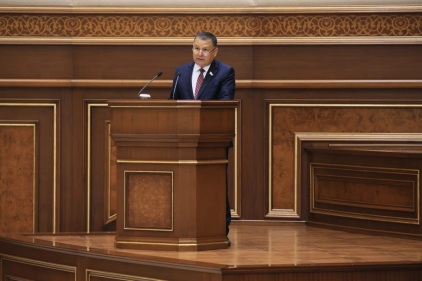
Tashkent’s growing weight in regional trade and diplomacy.
Kazakhstan has its benefits. Already strategically important for its oil and uranium resources, it also plays a key role in east-west transport networks due to its vast territory between Russia and China. The two countries are finding out together that geography can become a sort of political capital.
The most obvious is the Middle Corridor, linking China and Europe through Central Asia, the Caspian Sea, the South Caucasus and Turkiye.
Kazakhstan and Azerbaijan, already key to the route, are strengthening ties with Uzbekistan. Governments and companies have sought alternatives to shipping goods across Russia, and the corridor, complicated as it is, has gained popularity.
Kazakhstan, Uzbekistan and Azerbaijan are also constructing a Caspian green-energy corridor to transmit renewable electricity from Central Asia to Europe via a Black Sea cable. This boosts the list of areas where the region could be useful to powers far beyond its borders.
Uzbekistan or Kazakhstan have suddenly become world powers. Their power lies not in what they have, but in what they can give to someone who needs what they have – a transport route, energy supplies, access to a market or a politically useful relationship.
Neither Moscow’s backyard nor Beijing’s satellite
Regional politics is still often framed as a Russia-China-West conflict. This perspective misses how Uzbekistan and Kazakhstan operate, according to Shiriyev: they cultivate multiple relationships because dependence on one power is risky.
Both have strong ties with Moscow and Beijing and are building relationships with Turkey, the EU, and the US. Maintaining space between them is more important than choosing a geopolitical winner.
That balancing act is becoming more valuable as the international system fragments. A country does not need to compete with a great power militarily or economically if it controls a route, resource, or diplomatic channel they cannot easily replace.
In that sense, Kazakhstan’s oil and uranium provide Astana leverage that its population or economy alone would not suggest. Uzbekistan’s weight is different: its large domestic market, central position and increasingly active regional diplomacy make Tashkent harder to ignore in decisions affecting Central Asia.
Stay up to date with all the latest news: