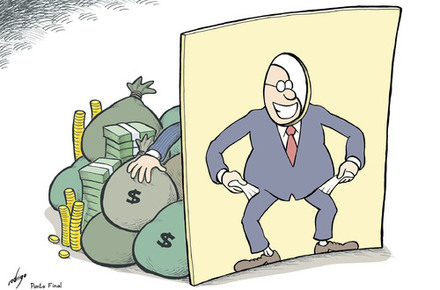
On June 22, the President of Uzbekistan signed a comprehensive anti-corruption law. This landmark legislation officially enumerates corruption-related offenses and establishes specific legal restrictions imposed on corrupt individuals.
Corruption-Related Offenses
Under the amended Criminal Code, the following offenses are now legally classified as corruption-related crimes:
- Embezzlement or Misappropriation: Theft committed through the abuse of official or public position (Article 167, Part 3, Paragraph "d").
- Fraud: Deceptive practices committed by leveraging one's professional or official standing (Article 168, Part 4, Paragraph "g").
- Commercial Bribery: Unlawful inducement or kickbacks within commercial activities (Article 192-9).
- Bribery of Non-Governmental Staff: Bribing an employee of a non-governmental commercial enterprise or other private organization (Article 192-10).
- Abuse of Power in the Private Sector: Self-serving abuse of authority by officials within non-governmental commercial entities or private organizations (Article 192-11, Part 2, Paragraph "c").
- Abuse of Power or Official Authority: Self-serving abuse of administrative power or official positioning (Article 205, Part 2, Paragraph "c").
- Exceeding Authority: Self-serving actions that willfully cross the boundaries of one's official power or mandate (Article 206, Part 2, Paragraph "c").
- Official Inaction: Self-serving failure to act or perform mandatory duties by an official (Article 208, Part 2).
- Forgery by an Official: Self-serving falsification of public documents or records by an authority figure (Article 209, Part 2, Paragraph "c").
- Receiving a Bribe: Accepting unlawful payments, gifts, or favors (Article 210).
- Giving a Bribe: Offering or providing unlawful financial inducements to an official (Article 211).
- Bribery Mediation: Acting as an intermediary or broker in bribery transactions (Article 212).
- Bribery of Public Employees: Unlawfully inducing an employee of a government body, state-backed enterprise, or community self-governing organ (Mahalla) (Article 213).
- Illicit Enrichment of Public Employees: Unlawful acquisition of material goods or financial benefits by an employee of a state body, state-backed organization, or local self-governing entity (Article 214).
- Illicit Enrichment in Sports: Unlawful acquisition of material goods or financial benefits by participants or organizers of athletic competitions (Article 214-1).
- Match-Fixing and Sports Bribery: Unlawful inducement or bribery targeting participants and organizers of sporting events (Article 214-2).
- Military Abuse of Power: Self-serving abuse of authority, exceeding power, or deliberate inaction committed by military officials (Article 301, Part 2, Paragraph "b").
Furthermore, money laundering (Article 243 of the Criminal Code) is legally classified as a corruption crime if the laundered funds or assets were originally generated through acts of corruption.
Registry of Corrupt Officials
Pursuant to the new amendments to the Combating Corruption Law, an electronic registry will be established to track individuals convicted of corruption offenses.
Individuals placed on this registry will face the following strict legal prohibitions:
- Public Service and Honors: Barred from entering civil service and receiving state awards.
- Elections and Direct Appointments: Prohibited from running for elected office or being nominated for special-appointment public positions.
- Advisory and Collegial Bodies: Banned from serving on public advisory councils or inter-agency collegial boards attached to government bodies.
- Public Procurement and PPPs: Restrictions on participating as a contractor or partner in public procurement or Public-Private Partnership (PPP) agreements, specifically applying to businesses founded by the individual or where they hold more than a 50% equity stake.
- Institutional Leadership: Barred from holding executive leadership positions in state-backed enterprises (where the government's share exceeds 50%) or public educational institutions.
The Ministry of Internal Affairs is required to input a convicted individual's data into the registry within 3 working days after a guilty verdict or final judicial decree takes legal effect.
The records will remain public and active in the database for the entire duration of the individual's criminal record, as defined by the Criminal Code. The registry is co-managed by the Anti-Corruption Agency and the Ministry of Internal Affairs.
Will the Registry Be Publicly Accessible?
The law does not outline the specific procedures for accessing information within the electronic registry; in particular, it leaves it unclear whether the database will be open to the general public. While a 2021 presidential decree originally mandated the creation of this registry, the new law simply states that accessing data and removing individuals from the database will be governed by "established legal procedures." This wording implies that these critical details will be regulated through subsequent presidential decrees or government resolutions rather than the law itself.
The law officially entered into force on its publication date, June 23, 2026.
A Law Five Years in the Making
The mandate to officially codify corruption-related offenses, launch a public registry of offenders, and impose strict operational bans on them was first introduced in a presidential decree signed on July 6, 2021. Consequently, it took practically five years of administrative delays to finally codify and enforce the decree's objectives.
For context, data shows that 566 individuals previously convicted of corruption crimes in Uzbekistan were re-hired into civil service positions in 2023 alone, subsequently committing corruption offenses yet again.
Stay up to date with all the latest news: