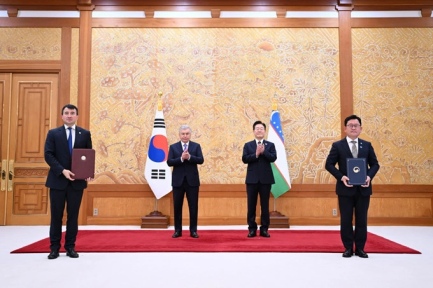
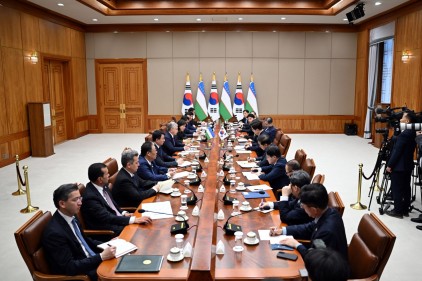
Uzbekistan Railways and the Czech engineering giant Škoda Group have signed a landmark strategic agreement for the delivery of 10 modern electric trains. The deal, valued at €120 million, was formalized at the Presidential Palace in Tashkent, marking a significant step in the modernization of Uzbekistan’s transport infrastructure.
The high-profile signing ceremony was attended by Uzbekistan’s President Shavkat Mirziyoyev and Prime Minister Abdulla Aripov, alongside Czech Prime Minister Andrej Babiš, underscoring the deepening bilateral ties between the two nations.
Modern Fleet for Regional Routes
Under the terms of the agreement, Škoda Group will supply 10 electric units designed specifically for regional routes on the 1520 mm gauge network. These trains will be based on Škoda’s proven technical platforms currently operating in Latvia and Estonia, ensuring a solution that is both modern and compatible with the region's existing railway infrastructure.
"Through the new joint venture and Škoda Academy, Škoda will share its expertise so that the partners can handle maintenance completely independently in the future," the company stated.
A Flagship Partnership
The project is positioned as a flagship initiative under the European Union’s Global Gateway strategy. It has received direct backing from the Czech government, the European Commission, the European Parliament, and the European Investment Bank, as well as insurance guarantees from EGAP.
"This project is the result of long-term cooperation between the governments, Uzbek Railways, and Škoda Group," said Škoda Group CEO Petr Novotny. "We are ready to share our advanced technologies and offer a solution that meets modern demands for efficient mobility."
Localization and Škoda Academy
Beyond the delivery of hardware, the contract emphasizes long-term sustainability through a new joint venture dedicated to localization and service. A centerpiece of this initiative is the establishment of the "Škoda Academy," a training center designed to transfer European technical expertise to the local workforce.