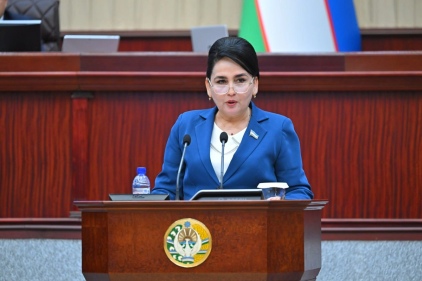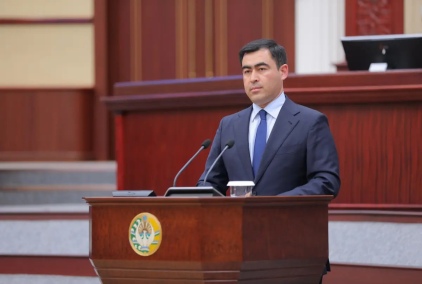
Uzbekistan can currently perform far fewer bone marrow transplants on children than it needs, Health Minister Eldor Adilov told MPs at a government hour in the Legislative Chamber on Nov. 11.
Adilov said 32 transplants were performed in 2025 and 36 so far in 2026. Twelve of this year’s procedures were done in Türkiye, 13 at the National Children’s Medical Center and 11 at the Children’s Oncology, Hematology and Immunology Center. In 28 cases donor cells were used, and in eight the patient’s own.
“We need to carry out bone marrow transplants for 400 children a year, at a minimum,” he said.
MP Zebiniso Rakhmonova of the UzLiDeP faction asked why so few procedures are performed when a transplantation law has been in place since 2022.
Adilov said a key step is completing a special aseptic building at the Children’s Oncology, Hematology and Immunology Center, to house a transplant unit and a typing laboratory for matching donors and patients. He said it is due to open in 2027, after a design change involving specialists from Austria’s AME International.
“Once we commission it, we will be able to raise the number of transplants sharply,” he said.
The minister also said a national donor registry is needed. A draft government resolution on maintaining the registry and on organizing and funding the typing laboratory is being coordinated with ministries, and he said adoption by year-end would create additional opportunities. He added that rare transplant drugs are hard to register because demand is small, so they are imported under one-time permits.
Adilov said the aim is to carry out most transplants in Uzbekistan’s clinics by 2030 in line with international safety and quality requirements, while continuing cooperation with foreign clinics on complex cases, training and technology transfer.
A bone marrow transplant moves blood-forming stem cells from the patient or a matched donor into the patient to treat some blood cancers and severe blood diseases. Presidential Resolution No. PQ-186 of May 19, 2025 set out measures for a 2025-2030 national program against childhood cancer, including aseptic and laboratory-diagnostic units at the Children’s Oncology, Hematology and Immunology Center.