The British Council has supported an international music project using field recordings from the dried seabed of Uzbekistan’s Aral Sea to explore the impact of one of the world’s most dramatic environmental transformations.
Once the fourth-largest lake in the world and home to a thriving fishing industry, the Aral Sea has lost around 90 per cent of its water volume over the past 60 years. In Muynak, once a bustling port, its retreat has left behind a vast desert landscape and the now-famous “cemetery of ships”.
With support from the British Council and working closely with Uzbek artists, Quinn Whalley from UK electronic duo, Paranoid London, travelled to the region to capture the sounds of this transformed landscape, from wind sweeping across the exposed seabed to the abandoned vessels that remain.
The recordings will form part of Two Seas, an ambitious international arts collaboration that brings the sounds of the Aral Sea together with field recordings from Finland’s Bothnian Bay, where melting ice is transforming another distinctive environment.
Together, the recordings tell a striking story about two very different effects of environmental change: one sea disappearing into the desert, the other gradually losing its frozen identity.
Two Seas is a partnership between Shambala Festival, Uzbekistan’s Stihia Festival and EarthSonic, the flagship climate programme of In Place of War. The resulting work will premiere as a specially commissioned live audiovisual performance at Shambala Festival before being released globally alongside a documentary film.
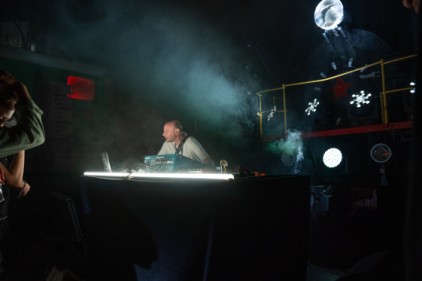
The project will culminate in a headline audiovisual performance at Shambala’s Data Mine venue, combining the new compositions with immersive visuals created by Matt Black (Coldcut/Ninja Tune) and Ben Sheppe (The Observatory).
The collaboration also forms part of a wider international exchange between independent festivals and cultural organisations exploring how creative events can respond to the climate crisis. The partnership focuses on sharing expertise in sustainable festival production, community engagement and artist development, while developing resilient business models for independent cultural organisations operating in environmentally challenging regions.
Tom Sweet, Senior Music Relationship Manager at the British Council, said: “It’s been a privilege to help bring together respected Uzbek and UK cultural organisations and support artists from both countries to collaborate, respond to and highlight the environmental impact of man-made actions on the Aral Sea in Uzbekistan. We hope that the partnerships formed during this project continue and inspire further work raising environmental awareness through music and the wider arts.”
Odil Mukhamedov, Executive Producer of Stihia, said: "For Stihia, the Aral Sea - Muynak in particular - has always been more than a place; it is the reason our festival exists. Sharing this landscape with artists from East to West, and transforming its sounds into music, is a powerful reminder that nature connects us all, regardless of borders. We believe cultural collaboration can inspire conversations, empathy and actions that transcend borders."
Sidharth Sharma, Creative Director of Shambala Festival, said: "Shambala, EarthSonic and Stihia operate on the front lines of cultural response to a changing world. By bringing these worlds into dialogue, we aren't just making music - we're documenting a changing planet while sharing ideas that can help independent festivals adapt and thrive in the face of climate change."
Following its premiere, the music created through Two Seas will be released via EarthSonic’s record label, accompanied by a documentary chronicling the collaboration and bringing the stories of the Aral Sea and Bothnian Bay to audiences around the world.
Shambala Festival takes place from 27–30 August 2026 at Kelmarsh Hall and Gardens in Northamptonshire.