Uzbekistan has agreed with Georgia on the electronic exchange of road transport permits and is working on establishing its own infrastructure in Georgian ports, the Transport Minister Ilkhom Makhkamov told the Uzbekistan 24 TV channel.
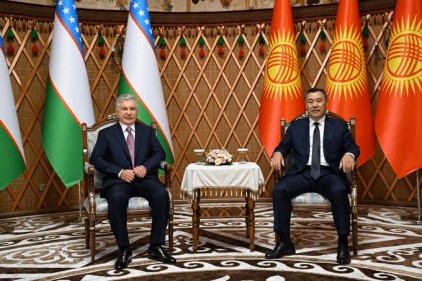
According to him, President Shavkat Mirziyoyev's state visit to Georgia matters for Uzbekistan not only in terms of economic development, but also for resolving transport and logistics issues.
"As part of the visit, today we agreed with our Georgian colleagues on the electronic exchange of all road transport permits — both between our two countries and for transit to third countries. This will, of course, create greater transparency, save considerable time, and offer real convenience for our carriers," the minister said.
Makhkamov noted that more than 60% of Uzbekistan's road carriers currently operate routes through Georgia.
The two sides also discussed rail transport. According to the minister, discounts of up to 70% currently apply to container shipments along the CASCA+ route, which links six countries.
"We've reached an agreement to extend these discounts to other types of railcars as well, in order to make the corridor more attractive," he said.
CASCA+ is a joint initiative of the state railways of Azerbaijan, Georgia, Kyrgyzstan, Turkmenistan, Turkey, and Uzbekistan. The route currently spans three regions — Central Asia (Kyrgyzstan, Uzbekistan, and Turkmenistan), the South Caucasus (Azerbaijan and Georgia), and Anatolia (Turkey). The "+" in its name signals openness to new participants interested in the corridor, whose ultimate goal is to link the countries of Southeast Asia — China in particular — with Europe.
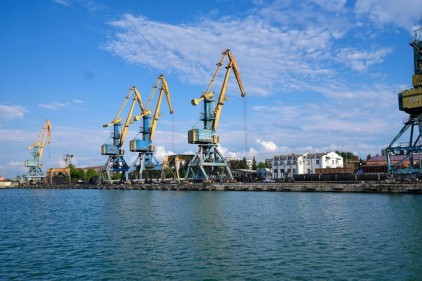
Special attention was also given to Georgia's Black Sea ports. Makhkamov reported that the two sides agreed to establish Uzbek-run infrastructure at these ports.
Akmal Kamolov, First Deputy Minister of Investments, Industry and Trade of Karakalpakstan, said in a segment of the program "Menimcha" that the republic hopes to use the Georgian route to export salt to Europe.
"Karakalpakstan has significant capacity for salt production, and we're already producing it. There are plans to build a warehouse at the major Georgian port of Poti. We intend to ship our salt there and use that warehouse to sell it across Europe," he said.
Asked what sets Karakalpakstan's salt apart on the global market, Kamolov said: "Karakalpakstan's salt is natural. In a way, the Aral Sea tragedy is turning a problem into an opportunity."
He added that there's demand for the product in Europe as well.
"It turns out there's strong demand here too for salt produced in Karakalpakstan. We're already exporting it to Germany and other European countries," he noted.
Asked about the shipping route for the salt, Kamolov said: "Right now we're planning to deliver it via Kazakhstan and the port of Azerbaijan."
Earlier, the Ministry of Investments, Industry and Trade (MIIT) reported that on July 3–4, Minister Laziz Kudratov, together with Transport Minister Ilkhom Makhkamov, visited the Georgian ports of Anaklia, Poti, and Batumi, as well as the Poti free industrial zone. The main focus of the trip was expanding Uzbekistan's exports and imports through Georgia.
In Anaklia, discussions centered on the possible involvement of Uzbek companies in building Georgia's largest deep-water port. Once operational, the port will be able to accommodate all vessel types and become part of international shipping routes — including ones tied to the future China–Kyrgyzstan–Uzbekistan railway.
In Poti, the two sides explored setting up warehouses and terminals for Uzbek export-import cargo. Similar discussions took place in Batumi, which could serve as another route for shipments across the Black Sea.
Following the visit, the two sides agreed to draft formal agreements and work toward establishing a consortium involving Uzbek companies, the MIIT reported.
Earlier, Minister Laziz Kudratov said that Mirziyoyev's visit to Georgia had resulted in agreements on 70 trade and investment projects worth a combined total of nearly $1 billion. He named logistics as one of the key areas of cooperation, describing Georgia as a "very important transport hub" for Uzbekistan — one that will let the country push its goods more aggressively into Western markets.
Stay up to date with all the latest news: