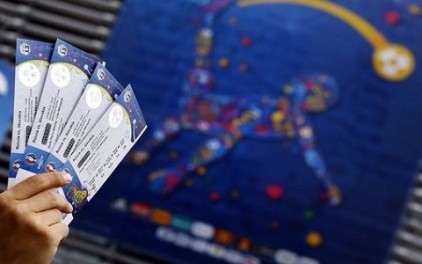
Uzbek fans are accusing football officials and allied bloggers of turning World Cup tickets into a lucrative resale racket — and the numbers on the table do little to dispel the suspicion.
Complaints first surfaced on social media, largely from Uzbek nationals living in the US, who said tickets meant for organized supporter groups were being resold at several times their face value. One Instagram user said he'd paid $450 apiece for two tickets. Other posts claimed tickets originally priced at $200–400 were being flipped for $900–2,000, and that "hundreds" of fans were shut out of the stadium entirely because of the inflated cost.
The Uzbekistan Football Association (UFA) pushed back, telling that FIFA ran the entire sales process "transparently and in several stages," entirely through official platforms. By its account, the first sales window opened right after the December 2025 draw and ran through January 13, 2026, with fans submitting applications rather than buying outright. Winners were picked in February through what FIFA calls a Random Selection Draw, with payment charged automatically once selected. A second window ran from March through June, allowing direct purchases of additional tickets through FIFA's official platform and, for VIP buyers, through On Location Hospitality.
Under FIFA's own rules, organized fan groups backing either team in a given match are guaranteed at least 8% of stadium tickets — regardless of nationality — with the rest going to general sale. For Uzbekistan's group-stage matches, FIFA set ticket prices between $140 and $700, with a limited allotment at $60.
Here's where the numbers start raising questions. The UFA says 14,073 tickets in total were set aside for organized Uzbekistan supporters. Of those, 8,064 were bought directly by fans through FIFA — straightforward enough. But the remaining 6,009 tickets were pre-ordered on behalf of a strikingly long list of parties: the UFA itself, the Ministry of Sports, the National Olympic Committee, the futsal association, the Professional Football League, the players' association, regional football bodies, professional clubs, players and their relatives, a centralized fan group, sports organizations, unspecified government agencies, sponsors, and Mahalla USA, acting on behalf of compatriots in America.
UFA maintains that all of these tickets were passed on at FIFA's set prices, with no markup or service fee added on its end. It also noted that FIFA's rules let any ticket holder resell or transfer tickets electronically through the official app and resale platform — and that this puts resale entirely outside the UFA's control. As the association put it, it has no authority to block or restrict resale of tickets once purchased.
That answer sidesteps the real complaint. Nobody disputes that FIFA set the original prices. The question is what happened to thousands of tickets after they left FIFA's hands and passed through a chain of federations, clubs, sponsors, and family members before some of them resurfaced on the resale market at triple the cost.
Two bloggers named repeatedly in the online backlash, Abdurakhmon Fozilov and Otabek Juraev, both stepped forward to deny direct involvement in fan-club ticket distribution — while acknowledging they'd personally handled and sold tickets.
Fozilov dismissed the specific rumor that he'd sold 700 fan-club tickets at $1,500 each, doing the math himself: even at $1,000 apiece, that would total $700,000, and he questioned where such a sum would supposedly disappear to. He said he had no hand in distributing fan-club tickets — that job belonged to "authorized persons" — and what became of them afterward wasn't his concern. What he did do, he said, was buy tickets himself: $380 and $430 for regular matches, and $500 for the Portugal game, all for his own group and sponsors, which he described as pricey first-category seats.
Juraev gave a similar account, saying sponsors gave him tickets, he passed some to relatives, and sold what remained "at whatever price the market demanded." He said Uzbeks based in the US ran into trouble specifically because they hadn't bought early — by the time they went looking, prices had climbed and the official site was sold out, pushing them toward bloggers and informal resellers instead. He described being gifted tickets by sponsor companies and by acquaintances arriving from China and the US, with the choice of whether to give them away or sell left entirely to him. He argued that reselling a gifted ticket wasn't improper — not "haram," in his words — since he'd also given tickets away for free, including one to his own son.
Meanwhile, fans who actually attended the matches said anonymously that on the day of the Portugal game they were quoted $1,000–1,500 for tickets by people connected to structures affiliated with the UFA. A separate source said acquaintances had offered to sell them tickets for the Colombia match in Mexico City and the Portugal match in Houston, and suggested individuals tied to football organizations may have had a hand in those sales.
That source's core criticism cuts to the heart of the scandal: the UFA never published clear rules for how tickets would be distributed among ordinary fans, and never released a list — even just by email — of who actually received them, broken down by category. Without that transparency, he argued, there was nothing stopping tickets meant for fans from quietly changing hands for profit long before they reached a stadium seat.
Stay up to date with all the latest news: