At a government meeting on Monday, the President Mirziyoyev ordered to transform solid municipal waste landfills into environmentally safe zones.
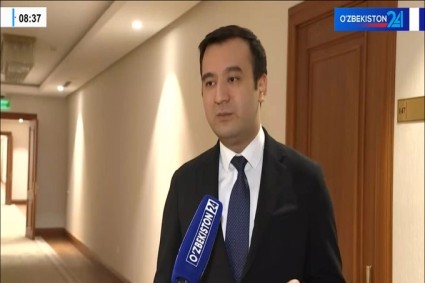
Deputy Chairman of Ecology and Climate Change Committee Iskandar Kutbiddinov told Uzbekistan 24 that the goal has been set to reduce landfills areas by 50% before 2030.
"Forty-seven landfills have already been reclaimed. At the meeting, he emphasized that waste should be understood as not only household waste but also industrial waste, including hazardous waste. Approximately 128 million tons of such waste have been piled up, and recycling plans have been developed for this waste. Waste incineration plants will receive an average of 500 tons of waste per day, which will enable a full recycling cycle, reduce illegal dumping, and alleviate the burden on existing landfills," the Deputy Chairman underscored in an interview with Uzbekistan 24.
According to Iskandar Kutbiddinov, personnel for these plants will be trained in "green" technical schools in collaboration with Green University.
The Director of the Agency for Waste Management and Circular Economy Sharifbek Khasanov told Uzbekistan 24 that six waste-to-energy projects were ongoing in six provinces, with a total investment of $950 million. These projects are currently complete by 30-40%, and are scheduled to be completed before 2027.
"The president has set an important goal: to set up 24/7 operations and ensure maximum utilization of waste as a raw material. Currently, only 3-4% is recycled, which is extremely low, so waste-to-energy projects have been launched with the involvement of foreign investors," Sharifbek Khasanov said in an interview with Uzbekistan 24.
The agency's head underscored that previously, approximately 14 million tons of waste were delivered annually to nearly 200 landfills.
"The goal is now to reduce the number of landfills by 50%. After all waste processing and incineration projects are operational, the landfills will be transformed into green gardens and parks," said Sharifbek Khasanov.
In October 2024, the president was presented with plans for waste incineration plants in the Andijan, Bukhara, Jizzakh, Kashkadarya, Navoi, Namangan, Samarkand, Syrdarya, Fergana, and Tashkent provinces, as well as the city of Tashkent. These projects were to be completed by 2027.
Three Chinese companies planned to erect power plants in the Tashkent and Samarkand provinces, Kashkadarya, and the Fergana Valley that would generate energy by incinerating waste.
The first medical waste to energy plant was launched in Tashkent in September. Forty-two waste landfills have already been shut down in Uzbekistan.
Earlier, , head of the National Committee on Ecology Aziz Abdukhakimov, called the landfills an "ecological bomb" and proposed returning state control to previously privatized facilities.
He also underscored that modern waste incineration plants are environmentally safe. "I've been to one of these plants myself, climbed up to the stack, inhaled the air—the air coming out is absolutely clean, no harm," the head of the committee said.