Uzbekistan's gold and foreign exchange reserves reached $75.08 billion as of February 1, 2026, the highest figure ever, the Central Bank said in a report.
In January, reserves increased by another $8.77 billion (+13.2%), and since the beginning of 2025, they have increased by $33.9 billion (+82.3%).
The main driver of this growth was once again gold, which has risen in price on global markets. According to the Central Bank, the increase in the price from $4,389.45 to $5,063.45 per ounce (+15.4%) added approximately $8.6 billion to the reserves (in October, there was an increase of $2.5 billion, in November, $1.8 billion, and in December, $2.9 billion).
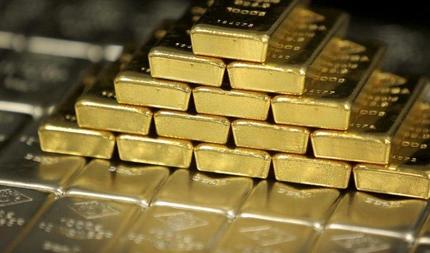
The physical volume of gold has increased for the fourth consecutive month. In January, it increased by 280,000 troy ounces (8.7 tonnes) to 12.83 million ounces (399 tonnes). This is the highest figure since statistics were compiled in 2013 (the previous record was set on December 1, 2022, at 12.82 million ounces).
Amid the rising price, the value of gold reserves increased by $9.88 billion and reached an all-time high of $64.98 billion. Gold accounts for approximately 86.5% of all reserves.
The foreign exchange portion of reserves decreased by $1.12 billion this time, to $9.52 billion.
The volume of securities increased by $4.8 million, to $1.53 billion.
By international standards, Uzbekistan's reserves are very high: they can cover 19 months of imports, significantly exceeding the IMF-recommended minimum of three months.
The Central Bank previously stated that this reserve structure, with gold accounting for a large share, reflects a conservative approach. However, the regulator has already begun diversifying the portfolio, taking into account the risks of price volatility.
The Central Bank's gold and foreign exchange reserves remain a key instrument for ensuring economic stability: they help smooth out sharp fluctuations in the national currency exchange rate, fulfill external obligations, ensure imports in crisis situations, and serve as a buffer against external shocks—from falling global commodity prices to turbulence in financial markets.