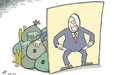
Uzbekistan, a lower-middle-income country where the average gross monthly salary is about $540, has sharply raised the one-time cash rewards paid to chess players and their coaches for medals at major international tournaments.
Players who win gold at the World Chess Olympiad and Paralympiad will receive $200,000, and their coaches $50,000. Silver medalists will receive $100,000 and their coaches $25,000, while bronze medalists will get $50,000 and their coaches $12,500.
Before the resolution, rewards were pegged to the base reference value (BRV). At its current level of 440,000 soms, a player who won gold at the World Chess Olympiad received 2,000 BRVs (880 million soms, or about $75,000), silver earned 1,000 BRVs (440 million soms) and bronze 500 BRVs (220 million soms). Coaches received 440 million, 220 million and 110 million soms, respectively.
Bonuses for other competitions
Separate payments have been set for the first time for the World Youth Chess Olympiad and Paralympiad. Players will receive $20,000 for gold, $10,000 for silver and $5,000 for bronze. Coaches will get $5,000, $2,500 and $1,250, respectively.
Previously, players received 300, 150 and 75 BRVs for such results (132 million soms for gold, 66 million for silver and 33 million for bronze), while coaches received 150, 75 and 37.5 BRVs (66 million, 33 million and 16.5 million soms).
Under the previous system, players were paid 70, 35 and 17.5 BRVs (30.8 million, 15.4 million and 7.7 million soms), and coaches 35, 17.5 and 8.75 BRVs (15.4 million, 7.7 million and 3.85 million soms).
Players who earn the international grandmaster title will now receive a one-time bonus of $5,000, equal to about nine months of average pay. The previous payment was 100 BRVs (44 million soms).
Coaches' rewards are intended for specialists who trained a winner or medalist within the past year. If several coaches were involved, an appendix to the resolution says the set amount may be divided among up to four coaches and other specialists, by decision of a coaching council.
A costly priority in a lower-income economy
At the average wage, a $200,000 gold-medal bonus equals more than 30 years of pay. Even the old $75,000 payment was worth roughly a dozen years of average earnings. The new amount is almost three times as large.
The increase comes as poverty remains a concern. The national poverty line is set at 669,000 soms (about $54.5) per person a month, and the government says about 2.2 million people were below it at the end of 2025. The poverty rate is reported at 5.8%, down from 8.9% in 2024, but the line is low by international standards. It is less than half the $126 threshold the World Bank uses for lower-middle-income countries.
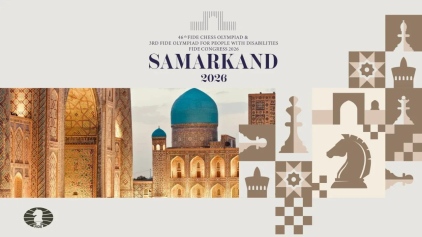
The payments follow a run of results that has made chess a source of national pride. Uzbekistan won gold at the 2022 Olympiad in Chennai and bronze in Budapest in 2024, and it is hosting the 46th Olympiad in Samarkand, which is under way. The state clearly regards chess success as a prestige investment. The bonuses are one-time payments to a small group of athletes and coaches, and the total cost relative to the budget has not been disclosed.
Even so, the size of the awards points to a wider question: whether the state is spending its resources in line with the country's needs. Rewards on this scale for a handful of medalists, in a country where millions live close to the poverty line and average pay is modest, strengthen the case for a fundamental review of how public resources are distributed, including how much goes to sports prestige compared with social protection, wages and public services.
Stay up to date with all the latest news: