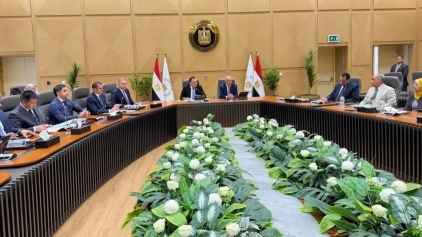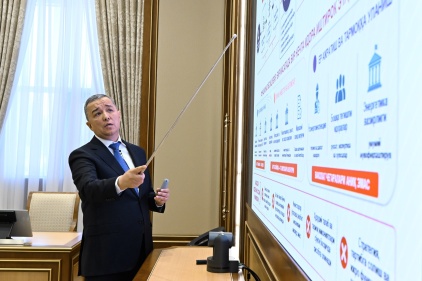
President Shavkat Mirziyoyev reviewed a presentation on prospects for developing the electricity sector and improving project management mechanisms in the fuel and energy industry, the presidential press service reported.
As a result of work carried out in recent years, the combined capacity of solar and wind power plants has surpassed 6.3 gigawatts. The number of hydroelectric plants has grown to more than 100, with combined capacity approaching 2.5 gigawatts. The expansion of renewable energy sources is saving substantial volumes of natural gas each year.
By 2030, Uzbekistan aims to grow its economy to $300 billion, with the population expected to exceed 41 million. Industrial electricity consumption alone is projected to rise from 38 billion kilowatt-hours to 53.5 billion kilowatt-hours by 2030. The growth of electric vehicles and data centers will place additional strain on the system.
Officials noted the need to build generation capacity ahead of demand, expand the throughput of power grids, and maintain adequate reserve capacity.
Under the plan, the country's generation capacity is set to reach 46.1 gigawatts by 2030, enabling annual output of nearly 129 billion kilowatt-hours. By 2035, capacity is projected to reach 57.2 gigawatts, with annual generation of 154.7 billion kilowatt-hours.
The presentation also examined various scenarios for consumption growth. According to the calculations, moderate consumption growth would keep generation and demand in sufficient balance through 2030. However, if the economy, industry, electric transport and digital infrastructure develop at a rapid pace, additional generation capacity will be needed.
The president stressed that energy sector plans must account for high rates of economic growth and that the system must maintain sufficient reserve capacity at all times.
Building on this, proposals were reviewed to construct additional wind power plants and energy storage systems, and to accelerate ongoing solar and wind energy projects.
At the same time, officials noted the need to review certain projects with low economic efficiency, unclear financing sources, or long-standing delays.
In selecting new capacity, the key criteria were defined not merely by scale, but by the cost of electricity generation, the feasibility of grid connection, compatibility with energy storage systems, and the impact on the overall energy balance.
As the share of renewable energy sources grows, the importance of energy storage systems is also increasing. Such systems allow electricity generated by solar and wind plants during the day to be stored and fed into the grid during the evening peak-load period, reducing the need for supplementary gas-fired generation and improving overall system stability.
Currently, 26 energy storage projects with a combined capacity of 4.2 gigawatts have been developed, of which 17 are in the implementation phase. Additional new projects in this area were proposed for development through 2030.
The president noted that alongside boosting generation capacity, it is necessary to build out transmission networks and substations that deliver power to consumers ahead of need.
By 2030, plans call for the construction of nine new 220-kilovolt and seven new 500-kilovolt substations, along with nearly 5,000 kilometers of new transmission lines. This will make it possible to connect new power plants to the grid and expand the exchange of capacity between regions.
In particular, a number of strategic 500-kilovolt transmission lines and new substations are set to come online between 2027 and 2029. The presentation separately reviewed the status of their construction, financing issues, and measures to address existing delays.
The meeting also discussed creating new infrastructure for the digital economy in Karakalpakstan by tapping into the region's substantial renewable energy potential. It was proposed to link planned wind power plants in the region to data centers with a combined capacity of 1 gigawatt, which would require building a new 220-kilovolt substation and transmission lines. This infrastructure would allow new data centers to be integrated into the power grid, attract high-tech investment, and make efficient use of the region's existing energy potential.
Stay up to date with all the latest news: