In keeping with its tradition, the Tashkent Times is highlighting certain provisions of Uzbekistan's legislation that will come into force on May 1, 2026.
Paper consumption to be reduced
Starting May 1, 2026, state organizations will gradually reduce their paper-related expenditures over the next five years. This was outlined in a corresponding government resolution dated March 18, 2026.
Under the resolution, beginning May 1, 2026, national and local executive authorities will be required to:
- plan annual budgets for the purchase of paper, ink, printers, and copying equipment with a 15% reduction each year over the next five years;
- deploy a centralized shared-printer system, allocating one printer for every 20 employees working in open-plan shared office spaces;
- hold a monthly "Paper-Free Day" eco-initiative.
By June 1, 2026, dedicated recycling bins for used paper are to be set up, and a system for delivering collected paper to recycling facilities will be established. In addition, paper usage limits will be set for each department based on staff size, workload, and actual need.
Additionally, starting May 1, a monthly "Paper-Free Day" eco-initiative will be held, during which employees will be required to handle all documentation exclusively in electronic format.
From May 1, plans are also in place to fully digitize documents held in departmental archives and to establish a system for submitting them to the state archive in electronic form.
No Entry Without an Intercom
Starting May 1, 2026, new requirements will apply to newly constructed multi-apartment residential buildings, as set out in a corresponding decree issued by the head of state on February 5, 2026.
Under the document, from May 1, 2026, the project documentation for all newly built multi-apartment buildings must provide for the installation of surveillance cameras at each entrance, in elevators, and across adjoining grounds, as well as intercom systems at entry doors.
Specifically:
- project documentation that does not include these features will not be permitted to pass technical review and expert evaluation;
- these installations are classified as common shared property, handed over to the property manager for maintenance in the prescribed manner, with the relevant information entered into the "Residential" section of the "My Home" automated database system.
Upon the official commissioning of a completed multi-apartment building, the cadastral passport — formalized in the prescribed manner — will be automatically reflected in the "Residential" section of the "My Home" automated database. Buildings where surveillance cameras and intercom systems have not been installed will not be permitted to receive commissioning approval.
Additionally, the central electrical distribution units in multi-apartment buildings will be operated and maintained at the expense of regional electricity network companies.
For multi-apartment buildings not connected to a centralized sewage network, wastewater removal services will be provided on a scheduled basis by subsidiary enterprises of "Uzsuvtaminot" JSC, either under individual contracts with residents or with the service cost bundled into the drinking water tariff.
The "10,000 Steps on Foot" Initiative Is Being Revived
On March 25, 2026, the President signed a decree on a comprehensive set of measures to accelerate environmental education, science, and awareness as part of the national "Eco-Culture" project.
Under the decree, starting May 1, the "10,000 Steps on Foot" initiative will be relaunched and the "Healthy Lifestyle" platform will be brought into operation. The platform will receive 10 billion soums annually from the Special Fund.
Also from May 1, 2026, the "Young Ecologist" badge will be established to recognize and reward young people who have shown outstanding initiative in the field of environmental protection, as well as schoolchildren who have excelled in eco-related activities.
The badge will be awarded at the following levels:
- Third-degree "Young Ecologist" — for schoolchildren;
- Second-degree "Young Ecologist" — for vocational college students and university-level youth;
- First-degree "Young Ecologist" — for young people who have achieved notable results at the national or international level.
EV Charging to Receive Government Subsidies
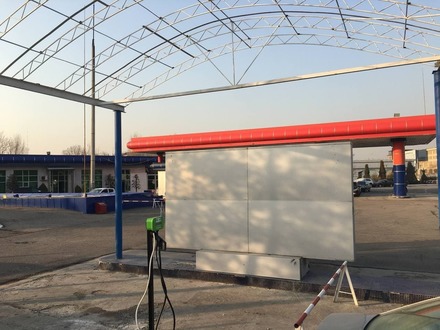
Starting May 1, 2026, the portion of the electricity price at EV charging stations that exceeds 300 soums per kWh will be covered by the state budget. This arrangement is outlined in the 2026 state program approved by presidential decree.
Furthermore, the starting auction price for land plots purchased for the construction of charging stations will be set at half their market value. This measure also takes effect on May 1, 2026.
Other Changes
Starting May 1, 2026:
- a scheme will be launched to cover — through the State Employment Assistance Fund — the costs of vocational training for demobilized soldiers who wish to work in the private sector, as well as the costs of on-base occupational training for active-duty servicemen;
- the Accounts Chamber will establish strict oversight — through working groups that monitor the implementation of legislation and directives in the provinces— over the processes of legally financing winning projects and ensuring their effectiveness, and will submit annual reports to the Presidential Administration;
- enterprises that launch the production of goods (or provision of services) based on unpatented scientific research and development will pay profit tax at a rate reduced by 50% of the standard rate for the period from May 1, 2026 to May 1, 2029.
- on the 10th and 25th of each month, "Car-Free Day" and "Car-Free Week" campaigns will be held. During these events, civil servants will be strictly prohibited from using official vehicles. When these dates fall on working days, drivers will retain their salaries;
- the Presidential Virtual Reception information system will deploy a categorization process for incoming appeals, classifying them as "urgent," "routine," or "requiring consultation." Appeals referred back for review must be re-examined by higher authorities within three working days;
- to improve the effectiveness of child support collection, a system will be implemented whereby individuals with outstanding alimony debts will be restricted from completing certain major transactions and accessing select financial, credit, and government services until the debt is fully settled;
- use of standards at all levels will be made voluntary; international best practices for adopting international (regional, and foreign) standards within Uzbekistan will be introduced, and an official list of standards will be compiled at the level of national standards;
- organizing Umrah pilgrimages will require mandatory registration through the unified "Hajj and Umrah" portal. Conducting such pilgrimages without entering pilgrims' details into the portal will not be permitted;
- applications for education loans will be submitted through the Ministry of Economy and Finance's "Education Credit" information system (talim-krediti.mf.uz) or the Unified Interactive Government Services Portal (my.gov.uz);
- when processing goods under periodic customs declarations, importers will have the option to pay customs duties separately for each batch as goods enter the territory of Uzbekistan;
- certain document requirements will be abolished in the provision of archival services;
- on a pilot basis, self-service facilities will be made available in the migration and personalization units of internal affairs bodies in one district (or city) each in Tashkent, Samarkand, and Fergana regions, as well as in the Republic of Karakalpakstan. AI-powered "smart migration stations" will also be established;
- when providing state services related to disability assessment (for those with disabilities from childhood and for Group I and II disabilities), the processes of generating referrals for preferential medical treatment and booking electronic appointments will be carried out through a single composite form;
- all types of licensing, permitting, and notification procedures will be governed by the Law on Licensing, Permitting, and Notification Procedures and will be conducted exclusively through the "License" information system or the Unified Portal — with the exception of licensing, permitting, and notification procedures falling under the authority of the Central Bank and the National Agency for Prospective Projects.
Follow us on: