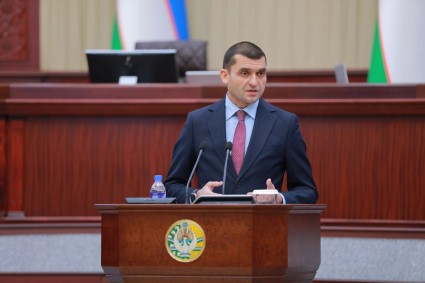
At a meeting of the Legislative Chamber on Tuesday, MPs heard a report from the Health Minister Asilbek Khudayarov on the progress of healthcare development programs.
Over the course of the year, more than 12 million individuals from at-risk groups underwent routine preventive checks: 7 million were screened for cardiovascular diseases, over 800,000 for diabetes, and over 800,000 for tuberculosis.
"Why cardiovascular diseases? Because people with cardiovascular diseases and diabetes are the group most likely to seek medical care, be hospitalized, and take a large number of medications," the minister explained.
Digitalization and Trust in Doctors
According to Asilbek Khudayarov, thanks to the digitalization of health system and creation of a patient pathway, trust in family doctors has raised.
Clinic visits raised by 30%, ambulance calls decreased by 20%, and hospitalizations decreased by 15%. According to him, the ministry's main goal is to increase the share of outpatient care to 70-80% by 2030, with an emphasis on preventive medicine and primary care.
"Together with international experts, we conducted economic and financial calculations. According to forecasts, if investments in primary care yield effective results, the state can save seven times more than the cost of inpatient and specialized care," he said.
According to the minister, the emergency medical service received over 13 million calls in 2025 (over 13.5 million in 2024). For the first time, specialized ambulance teams using compact electric vehicles have been organized. The ambulance fleet has been updated with the purchase of 1,000 vehicles.
As a result of increasing the number of ambulance crews from 1,648 to 2,865, funds contributed for medications have raised 16-fold, and response times have decreased threefold.
Attracting Specialists to Provinces
In Ishtykhan district of Samarkand province, the performance of outpatient clinics has begun to be assessed using the KPI system. Taking into account bonuses and professional development, the salaries of family doctors have been raised to 11 million soums.
The Minister underscored that due to technical reasons, the implementation of the KPI system was postponed until March of next year. Meanwhile, the salary of a typical family doctor could increase from the current 11 million soums to 21 million soums. For nurses, it could increase from 5 million soums to 10-12 million soums.
According to experts, the first and most effective mechanism for filling vacancies in remote and rural areas is not coercion, but financial incentives, stated Khudayarov.
"More than 70,000 patients have been examined in specialized medical centers, and over 17,000 surgical procedures have been performed. In 2025, 242 new diagnostic and treatment methods were introduced into medical institutions. Furthermore, by performing over 300 complex medical interventions at the district level and organizing specialist visits to over 300 districts, we have reduced the number of visits to provinceal and national medical institutions by 55%," the minister reported.
Integration of Primary and Specialized Care
The Minister of Health underscored that the creation of a centralized laboratory service remains a priority. Modern laboratory equipment from China has already been delivered to three districts of the Samarkand province; delivery to the remaining districts is planned by January 10.
According to the minister, the integration of specialized care with primary care is unsatisfactory. The President previously issued an order: each center at the district and provinceal level must submit a plan for 2026, coordinated with local khokims. Planning will be based on disease statistics to ensure specialists are deployed where they are most needed.
Starting January 1, the pilot project in the Samarkand province will be extended to all districts, with a new primary care system, inpatient facilities, regulations, and digitalization.
Staffing Shortage
"What is our main problem? The main problem is staffing. The inventory shows that there aren't enough. This means that, in addition to medications, we need to strengthen our staff and material and technical resources," Khudayarov emphasized.
He cited the Pastdargomsky district, where there's a shortage of 40 family doctors, and the Kattakurgan District, where there's a shortage of 23.
Preventive and Neonatal Care
In 2025, 84 million women of childbearing age and 13.7 million children under 18 received preventive examinations. Antenatal care was also provided to pregnant women.
"Pay attention to these figures. We're discussing this in all provinces. The birth rate is almost 1 million. Our demographic indicators are high, but this is also due to children with disabilities, as well as government expenditures," the minister emphasized.
He reported that contraceptive use among women for medical reasons was actively increasing this year. Neonatal care was provided to 756,200 newborns. More than 840,000 children underwent oncohematological screening, and oncohematological diseases were detected early in 820 of them.
For the first time, maternity hospitals were equipped with equipment worth the equivalent of $150 million: 200 facilities received full equipment. Maternal mortality decreased from 21 to 11 per thousand, and child mortality decreased by almost half.
"However, maternal mortality in Samarkand has doubled compared to last year. Furthermore, in the Tashkent and Surkhandarya provinces, as well as in Namangan and Fergana, the rates remain high. We will have to work very intensively here. These rates are higher than the national average. "Infant mortality has increased in the Kashkadarya, Samarkand, and Surkhandarya provinces. Overall, the rate is declining across the country, but in some provinces it has increased," the minister concluded.