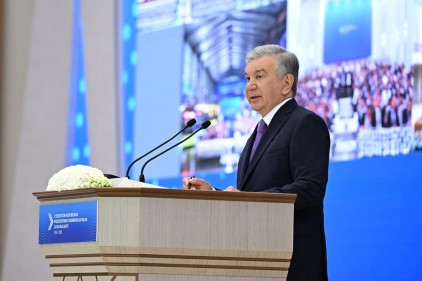
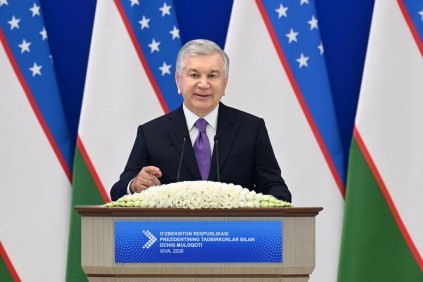
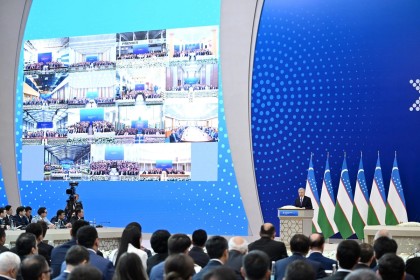
President Shavkat Mirziyoyev has signed a decree overhauling the way state agencies inspect and penalize small businesses, responding to nearly 14,000 complaints entrepreneurs raised during his sixth open dialogue with the business community.
The decree, signed Aug. 27, imposes an immediate three-year moratorium on inspections of small businesses, with narrow exceptions for criminal investigations, checks tied to public health or labor law violations, complaints from citizens, VAT refund claims, and cases where a business is being shut down. Any inspection outside those categories during the moratorium will be deemed unlawful, and the officials responsible will face consequences. The business ombudsman will also audit regulators' inspection records from the past three years under a program called "Effective Oversight," with businesses found to have been improperly inspected entitled to have their rights restored.
The reforms extend beyond the moratorium. Starting Jan. 1, 2027, businesses that commit a first-time violation causing no harm to public health, safety or others' property will receive a warning and 10 days to fix the problem rather than an immediate fine. Any follow-up inspection within a year will require sign-off from the business ombudsman, except for routine desk tax audits.
Separately, a "Second Chance" economic amnesty running through the end of 2026 will let small and medium-sized businesses clear accumulated tax debt without penalty interest, provided the underlying debt is paid in full by year's end. Businesses that voluntarily correct past tax filings and pay any shortfall by Dec. 31 will likewise avoid penalties on the amount owed, and unpaid fines and administrative penalties dating to before Jan. 1, 2026, will be written off.
The government is also moving to cut fines broadly. The Ministry of Economy and Finance, working with the Ministry of Justice, the Prosecutor General's Office and the business ombudsman, has three months to submit legislation to the Cabinet of Ministers reducing financial and administrative penalties by an average of 50 percent.
In a further shift favoring businesses in legal disputes, the decree establishes a presumption that entrepreneurs have acted lawfully unless a government agency proves otherwise, placing the burden of proof on the state in court and administrative proceedings. Ambiguities in the law or gaps in the evidence a government agency presents will now be resolved in the business's favor.
The decree also opens new funding channels for entrepreneurs. A "Future Entrepreneur" program set to run from 2027 to 2030 will finance up to 30 startups across eight priority sectors through open competition, with each project eligible for up to 5 billion soums in investment and the state's ownership stake capped at 49 percent. Private individuals who back startups will be designated "business angels" and exempted from income tax on gains from selling their stake after holding it at least three years.
Additional measures include loan guarantees covering up to 75 percent of financing extended through the Business Development Company, preferential loans of up to 5 billion soums for businesses with clean compliance records, and mortgages of up to 15 billion soums for entrepreneurs buying unused state-owned property.
The decree also sets new terms for utility payments: starting Nov. 1, businesses with automated, remotely controlled meters will pay 15 percent of their monthly electricity and gas usage in advance, unless they have fallen behind on payments in the prior two months — in which case they will also lose the option of self-reporting consumption to regional utility companies.
Stay up to date with all the latest news: