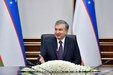
This year, Uzbekistan allocated an average of 250 billion soums to each district and 5.5 billion soums to each mahalla (neighborhood) to upgrade local infrastructure and improve conditions for residents and businesses. Despite these massive funds, local issues are still not being resolved in a timely manner in several areas, President Shavkat Mirziyoyev stated during a government meeting on July 16.
The meeting focused on establishing a "new environment" within neighborhoods and redefining how the "mahalla seven" organize their daily operations.
The Mahalla Seven is a unified team of local officials assigned to every neighborhood in Uzbekistan. Introduced as part of an administrative reform to decentralize governance, this team is designed to solve social, economic, and security issues directly on the ground without residents needing to contact higher authorities.
The head of state noted that after expanding the revenue-generation mandates of district mayors and mahalla chairmen, the volume of surplus revenue retained locally has doubled. Districts now retain an average of 22 billion soums, while individual mahalla budgets have received between 150 million and 200 million soums.
"To put it simply, both the mayors and the mahalla chairmen—and indeed every single representative of the 'seven'—already have the resources and authority needed to solve problems on the ground. What is missing is a sense of responsibility and initiative," Shavkat Mirziyoyev emphasized.
Data analysis reveals that local issues continue to linger in certain areas. Since the beginning of the year alone, more than 200 citizens' complaints have been logged through the People's Receptions from each of 87 specific mahallas.
The president attributed these gaps to the fact that mahalla chairmen are failing to design comprehensive master plans for their territories. He criticized local officials for not utilizing vacant plots, empty buildings, and structures as productive economic assets, noting that they often struggle to present concrete, well-argued requests to district, regional, and national leaders.
In 2026, 7.5 trillion soums were allocated to the "Participatory Budget" program. Despite this substantial funding, not a single proposed project secured a victory in 2,136 distinct mahallas. The head of state noted that the unity, civic engagement, and initiative of neighborhood residents should ultimately be measured by tangible, practical results on the ground.
The government meeting also reviewed the progress of micro-projects and efforts to boost local employment. Over the past six months, commercial banks have disbursed 18.5 trillion soums toward these specific objectives.
These funds paved the way for the implementation of 110,000 micro-projects, which effectively generated jobs for 259,000 citizens. However, a stark deficit in local initiative was observed in 47 mahallas, where only two micro-projects were launched per neighborhood.
In response, the president directed officials to step up the volume of small-scale neighborhood projects and intensify efforts to guarantee stable employment for the population.
During an earlier meeting on June 22, Shavkat Mirziyoyev announced that an additional 300 billion soums in permanent revenue streams would be funneled directly into mahalla budgets. Under this initiative, neighborhoods will receive a portion of the tax revenues generated within their borders, alongside a share of the fines collected for sanitation violations and illegal construction. These redirected funds are strictly earmarked for local infrastructure development, including roads, playgrounds, sports fields, public parks, and neighborhood employment initiatives.
Stay up to date with all the latest news: