 Saturday, 24, October, 2026
Saturday, 24, October, 2026
Saturday, 24, October, 2026

Uzbekistan has announced new support measures for cotton growers, agro-industrial clusters and exporters of finished textiles, as weaker global demand for cotton and higher logistics costs weigh on the sector. President Shavkat Mirziyoyev announced the measures on Sept. 24 at a meeting in Andijan.
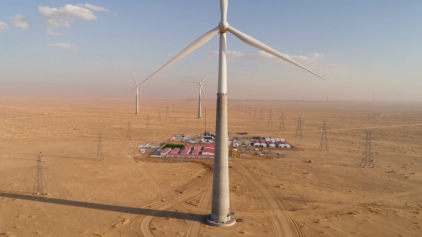
On 18 September, as part of his visit to the Karakalpakstan, President Shavkat Mirziyoyev participated in a commissioning ceremony for new energy facilities and launched the construction of the 1.5 GW Kungrad Wind Farm, implemented by Saudi company Acwa in Uzbekistan. The project also entails building the necessary grid infrastructure to integrate power generation into the national unified energy system.
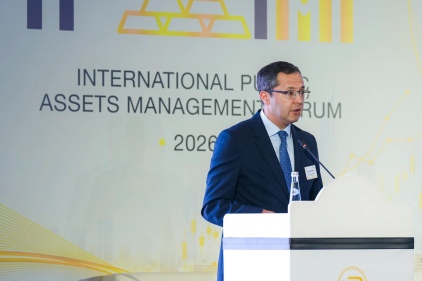
The Central Bank intends to maintain tight monetary conditions until the decline in inflation becomes sustainable and the rate approaches the 5% target. Central Bank Governor Timur Ishmetov made the statement today at the International Public Assets Management Forum in Tashkent.
Uzbekistan and Pakistan have discussed mechanisms to achieve their targeted $2 billion bilateral trade volume, Dunyo News Agency reported.
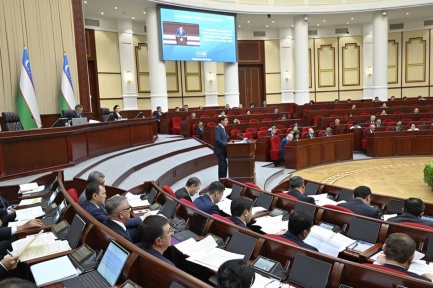
State budget revenue rose by 63 trillion soums in the first half of 2026, Deputy Prime Minister and Minister of Economy and Finance Jamshid Kuchkarov told senators at a Senate session Tuesday.
Russia has emerged as the top buyer of Uzbek goods, leading a trade surge that spans across Asia and Europe. According to the latest report from the National Statistics Committee, a small group of core partners bought the vast majority of Uzbekistan's outbound trade during the first seven months of the year.
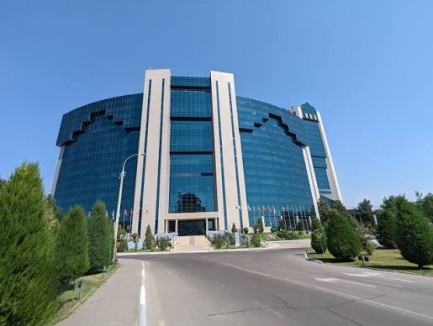
Uzbekistan plans to sell government stakes in a number of major companies, under a list approved by the August 28 presidential decree aimed at reducing the state's role in the economy.

Uzbekistan's per capita gross domestic product (GDP) reached 27,950,100 soums (approximately $2,349) in the first half of 2026, the State Committee on Statistics said in a report.
Uzbekistan's large enterprises produced 21.6 billion cubic meters of natural gas between January and July, down 15 percent from 25.4 billion cubic meters in the same period last year, according to the State Statistics Committee.
Uzbekistan's international trade turnover reached $49.5 billion in January-July 2026, up 8.1 percent from the same period a year earlier, the State Statistics Committee said in a report.
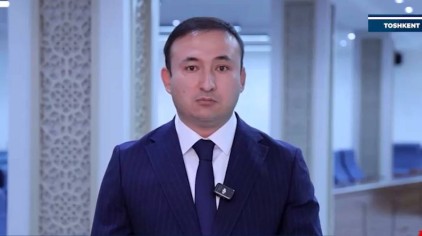
Uzbekistan is working toward eliminating poverty entirely by 2030, Farrukh Toshpulatov, an official at the Ministry of Employment, told the Renaissance television channel this week — a target officials say is now within reach after the country's original goal was met years ahead of schedule.
Uzbekistan intends to diversify the sources of its foreign direct investment rather than concentrate on a single region or country, the Central Bank Governor Timur Ishmetov said in an interview with the Financial Times.

Uzbekistan resumed gold exports in July after a pause, shipping $1.3 billion worth of the precious metal abroad, the National Statistics Committee said in a report.

Uzbekistan's money supply hit a record 434.5 trillion soums as of August 1, 2026 — the highest level in the country's economic history, the Central Bank reported.
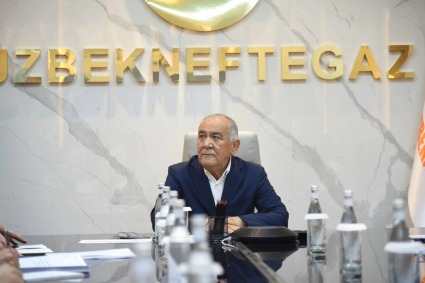
Uzbekneftegaz has reported accidents at some of its production facilities that have reduced the country's output of natural gas, gas condensate and liquefied gas. The state oil and gas company's press service disclosed the setbacks following a working meeting chaired by board chairman Abdugani Sanginov.
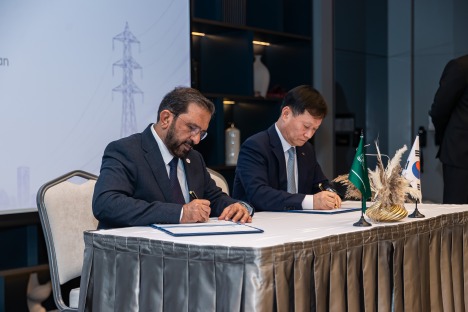
Saudi-listed company Acwa has entered into a Memorandum of Understanding (MoU) with Korea Western Power Co., Ltd. (KOWEPO) to explore potential opportunities in Uzbekistan's renewable energy market.
The World Bank will provide Uzbekistan with a $10.6 million grant to establish a mechanism for eliminating gas leaks, under the Cabinet of Ministers’ August 18 Resolution.
Reliable power supply remains the top concern for international investors considering data center projects in Uzbekistan, according to Bobur Khodjaev, chief of the Presidential Administration's Department for Financial Technology, Digitalization and Artificial Intelligence. He made the remarks on Monday at the Silk Road Finance & Technology Forum in Tashkent.
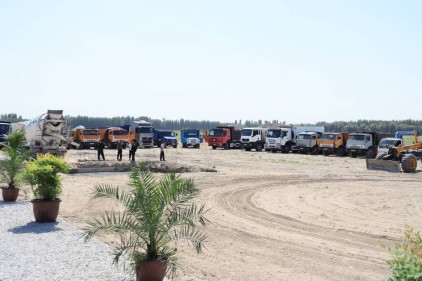
Construction has begun on a new electric bus manufacturing plant in the Yozyovon district of Fergana province, a joint venture with China's Xiang Yang Tenglong Automobile and GIG Investments that marks Uzbekistan's first major step toward building electric buses domestically rather than importing them fully assembled.
Revenue from privatization totaled 1.1 trillion soums over the ten years leading up to 2020, but reached 77.6 trillion soums between 2020 and 2025, the press service of the State Assets Management Agency reported.