Uzbekistan’s gold and foreign exchange reserves dipped to $68.99 billion as of April 1, 2026, marking the first decline since last July, according to the latest Central Bank data. A sharp 10.5% contraction in March—amounting to an $8.1 billion decrease—effectively wiped out the gains accumulated since the start of the year.
The primary driver behind this shift was the cooling of global gold prices. The Central Bank noted that a 12% price drop (from $5,174.1 to $4,553.95 per ounce) stripped $8.3 billion from the reserves' valuation. This follows a strong rally throughout the winter, where reserves surged by billions each month.
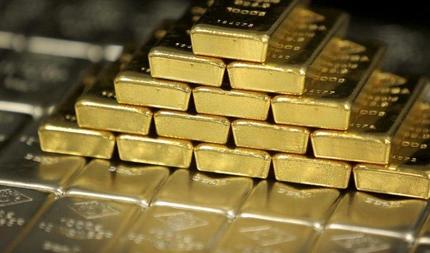
Interestingly, while the market value fell, the physical volume of the nation’s gold continued its six-month upward trend. The Central Bank maintained its strategy of accumulation over liquidation, adding 280,000 troy ounces (8.7 tons) in March. This brought the total holdings to a record-breaking 13.36 million ounces (415.5 tons)—the highest level in the country’s recorded history.
Despite this physical growth, the total value of the gold portion fell by $6.82 billion to $60.85 billion, now accounting for roughly 88.2% of total reserves. Simultaneously, foreign currency holdings hit a low not seen since early 2025, sliding to $7.57 billion. Meanwhile, the portfolio of securities saw a modest uptick to $1.54 billion.
Central Bank officials have previously characterized this gold-heavy composition as a conservative approach to asset management. However, the regulator has begun a gradual diversification of the portfolio to hedge against the inherent volatility of the precious metals market. Ultimately, these reserves serve as the bedrock of macroeconomic stability, providing the necessary leverage to stabilize the national currency, service external debt, and shield the economy from global financial turbulence.
Follow us on: