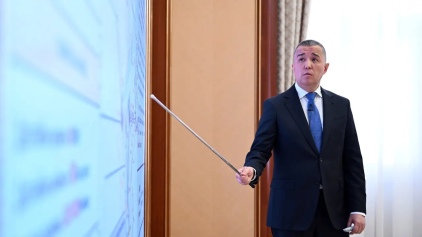
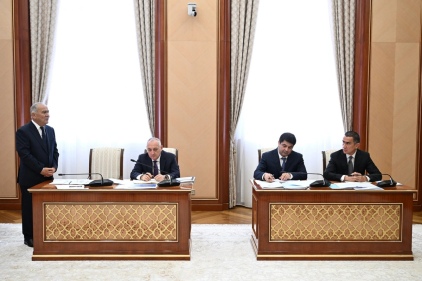
President Shavkat Mirziyoyev reviewed a proposal aimed at streamlining tax administration and overhauling the operations of Uzbekistan's tax authorities Monday.
Beyond tackling the shadow economy, the discussions focused on localizing services for major taxpayers. It was noted that the geographical distance between businesses and tax offices has hindered the quality of support and oversight for 209,000 VAT payers. Under the new plan, tax control for 500 non-strategic enterprises will shift to the provincial level, while over 103,000 businesses in agriculture, trade, and food services will be managed at the district level. This decentralized approach is expected to enhance local service quality, resolve issues swiftly, and tighten oversight.
Simplifying administration for entrepreneurs is another key priority. Surveys reveal widespread frustration with the complexity of audits, reporting, and payment processes. To address this, the automated "desk audit" (cameral control) system will be transformed from a punitive tool into a preventive one. Businesses will be categorized by risk level—Green, Yellow, and Red—a move projected to eliminate unjustified debts and penalties, saving entrepreneurs an estimated 8.4 trillion soums.
To bolster professional expertise, the government will upgrade the facilities and resources of the Tax Academy. Following the presentation, the president directed the implementation of a new operational model driven by digital technology, data analytics, and AI. The ultimate goal is to shift the tax system’s philosophy from "policing" to "service."
This reform follows the president’s sharp criticism in late January, where he described Tashkent’s tax operations as "completely unsatisfactory." He highlighted instances of corruption and "patronage" that caused significant budget losses, noting that criminal proceedings have already been initiated against the former head of the Mirzo-Ulugbek District Tax Inspectorate.
Follow us on: