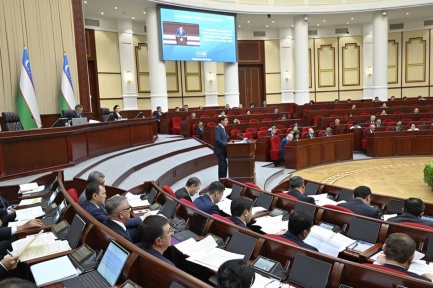
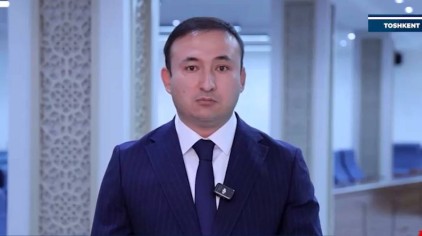
President Shavkat Mirziyoyev was presented with a report on steps to achieve projected economic figures for the Q1 of 2026 and to mitigate the impact of global market instability on the Uzbek economy.
Since the beginning of the year, an additional 2.3 trillion soums and $500 million have been contributed toward the development of 9 provinces. Another 3.9 trillion soums were handed to local budgets for 33 districts and 330 neighborhoods, with an equal amount provided to support 37 “difficult” districts and 903 neighborhoods. In the initial stage, 1 trillion soums were contributed toward the implementation of 283 "driver" projects.
By the end of the year, plans include allocating 1.2 trillion soums to develop infrastructure for busy streets and roadside zones, 450 billion soums to improve infrastructure in 150 neighborhoods with tourism potential, and 150 billion soums to set up 50 industrial micro-centers across 400 neighborhoods.
The report noted that escalating international tensions are increasing pressure on the economy, affecting logistics, import prices, and industrial stability. Specifically, rising global oil prices are impacting the cost of transport services and petrochemical products, making polyethylene and polypropylene more expensive.
Shavkat Mirziyoyev set the goal of keeping inflation within 6–6.5% this year (per Central Bank forecasts) and ordered operational steps for food imports, resolving logistical issues, and utilizing alternative transport routes.
Businesses are facing difficulties securing raw materials and accessing markets and financing. Key issues include disruptions in export shipping and rising transport costs.
In response, the president ordered to step up cooperation with neighboring countries, set up food exports by air, and to mull preferential tariffs for entrepreneurs.
The president emphasized that despite positive dynamics, officials must not become complacent. He set the goal to identify risks early, curb inflation, act proactively, and promptly resolve emerging problems across sectors and provinces.