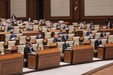
The Legislative Chamber on Oct. 20 approved a bill that would halve fines on companies that miss deadlines to repatriate foreign trade assets when mitigating circumstances apply. The bill, adopted in the second and third readings, now goes to the Senate.
The amendments to Article 11-1 of the Currency Regulation Law are meant to protect businesses who cannot recover funds or other assets on time because of foreign counterparties’ actions, restrictions by international payment systems or other factors beyond their control.
Courts could cut a fine by 50% if a company took all possible steps to recover the assets, including legal action; if at least 50% of the assets were returned; or if recovery was blocked by international sanctions, banking or payment restrictions, or currency-transaction bans abroad. The reduction would not erase the remaining debt.
Economic courts fined 3,500 businesses a combined 752 billion soums in 2024. In 2025, cases rose to 9,100 and penalties to 3.3 trillion soums.
Ulugbek Kabulov, a member of the parliamentary Committee on Combating Corruption and Judicial and Legal Issues, said MPs refined three provisions before the second reading.
“The first reading set the threshold at more than 50% of assets; the second reading sets it at 50% or more,” Kabulov said. “This clearly brings cases in which exactly half the assets were returned within the scope of the relief.”
MPs also added a force majeure clause and removed the phrase “widely recognized” from the reference to international sanctions.
Under the Currency Regulation Law, assets must be returned within 180 days of payment or export. Fines can reach 50% of the unreturned amount if delays extend beyond 545 days.
A presidential decree dated Aug. 27, 2026, provides for halving fines from Jan. 1, 2027. The bill enshrines that mechanism in law. The relief excludes companies with a state stake of 50% or more.