Alisher Qodirov, chairman of the National Revival Democratic Party and an MP in the Legislative Chamber, has responded to the Cultural Heritage Agency's rebuttal of his earlier remarks, saying he will pursue a parliamentary inquiry or hearing to get answers to his questions.
According to Qodirov, the agency issued a formal statement instead of answering questions MPs raised during a budget hearing in the Legislative Chamber.
"The party won't be responding to their response, of course — but we will try to use our right to a parliamentary inquiry or hearing to get answers to our questions," he wrote.
Qodirov accused the agency of trying to frame the issue as an matter of interethnic tension.
"It's quite astonishing that the agency, having ignored our criticism and proposals regarding Sarmishsoy, Shah-i-Zinda and the Mizdakhan fortress — all unique parts of our cultural heritage — is instead trying to turn this into a question of the artist's ethnicity and cast it as interethnic tension," Qodirov said.
The MP said he had submitted questions to the agency concerning Sarmishsoy, Shah-i-Zinda, an ancient Quran manuscript kept in Bukhara, and territories linked to the ancient state of Dayuan.
Qodirov noted that despite billions having been spent on Sarmishsoy, the open-air museum site remains neglected. He also raised concerns that a road running alongside Shah-i-Zinda is causing serious damage to the site, that Bukhara's ancient Quran manuscript is being stored in substandard conditions at the Ark fortress, and that land tied to the Dayuan-era sites has been handed over for farming.
"Why doesn't the agency show the same devotion to our thousand-year-old national culture and heritage that it shows toward Soviet-era heritage? We have dozens of questions, and we've been trying to get answers since last year," the MP wrote.
Qodirov said his objection is that irreplaceable cultural heritage sites are being overlooked while greater attention is paid to preserving other historical properties.
"We're objecting to the fact that our irreplaceable cultural heritage is being left by the wayside while more attention is being paid to preserving the apartment of a Russian painter, an Uzbek literary scholar, a Ukrainian architect, or any other compatriot whose worth we don't dispute — regardless of who they are. Or is preserving certain kinds of heritage simply more advantageous?" he wrote.
The MP also asked why the agency was responding via social media instead of answering the questions raised in parliament.
"What the public needs is an accounting of how the money being spent to preserve their values and thousand-year heritage is actually being used — not provocative statements," Qodirov said.
He said he was voicing these views as an MP, and that as party chairman he would take the floor in parliament after the Cultural Heritage Agency's own report.
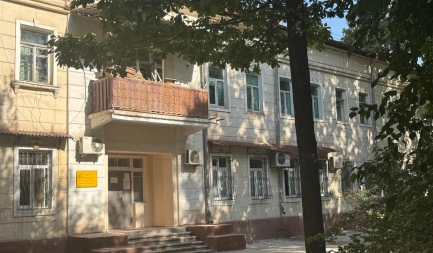
The exchange follows an earlier statement in which the Cultural Heritage Agency responded to Qodirov's comments about a cultural heritage site at 7 Bobur Street in Tashkent.
The agency said cultural heritage sites should not be evaluated using the criterion of "do we need this today or not." It also warned that such statements risk shifting the debate over heritage preservation from a legal and academic sphere into one of ethnic confrontation, and could stoke social tension.
"Cultural heritage is part of our shared history. It doesn't belong to one ethnicity, and it doesn't become 'foreign' because of the ethnic origin of the person associated with it," the agency said in its statement.
Qodirov had previously objected to the preservation of the Bobur Street site, arguing that the agency should prioritize protecting sites tied to national culture first.
Stay up to date with all the latest news: