The nationwide inventory audit revealing hundreds of missing artifacts from the Kokand and Syrdarya museums highlights a much deeper, systemic crisis within Uzbekistan’s cultural institutions. Experts and insiders warn that the outright theft of artifacts is only the tip of the iceberg, as the replacement of authentic, valuable items with high-quality reproductions has become incredibly common across the country's state funds.
While the Cultural Heritage Agency's recent commission confirmed that nearly 500 items vanished from the Kokand museum network and another 16 from the Syrdarya Province State Museum of History and Culture, independent observers suggest that a rigorous, specialized authenticity check would yield far more devastating results. Years of lax security and deep-seated corruption have allowed a clandestine market to thrive, where genuine historical treasures are quietly sold off to private collections and replaced by fakes on museum shelves. There is a growing consensus that a comprehensive forensic examination of materials and signatures could reveal that virtually every single high-value item remaining in Uzbekistan's public collections has probably been replaced by a reproduction.
The Shadow of the Karimova Era
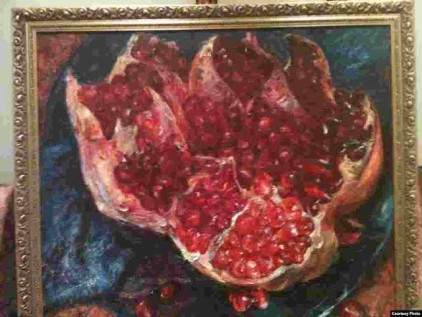
This dark legacy is tied heavily to the era of Gulnara Karimova, the daughter of the late President Islam Karimov. During her years of immense political influence, Uzbekistan's state museums were systematically plundered. Valuable masterpieces—including irreplaceable avant-garde and twentieth-century paintings from the world-renowned Savitsky Museum in Nukus and the State Art Museum of Uzbekistan—were reportedly confiscated on her orders or quietly pilfered.
The scale of this elite-level looting came to light globally when Uzbek dissidents and international law enforcement searched Karimova's luxury properties, including her $18 million villa in Geneva, Switzerland. Hidden inside her homes were hundreds of priceless national treasures, including masterworks by renowned Uzbek and Russian artists like Chingiz Akhmarov, Viktor Ufimtsev, and Lev Reznikov. Authorities later seized nearly 1,000 historical and cultural artifacts from her properties, valued at billions of soums, which had been stripped from public trust to decorate her private estates.
The Path Forward
The findings from the current audit in Kokand and Syrdarya have already been forwarded to the Prosecutor General’s Office for legal assessment and enforcement action. However, prosecutors face a monumental task. This phased inventory—mandated by a 2022 presidential decree involving the Prosecutor General's Office, the Cultural Heritage Agency, the Cabinet of Ministers' Inspection, and the Academy of Sciences—was designed to evaluate the physical presence of artifacts. To truly uncover the scale of the deception and address the deep institutional damage left behind by decades of corruption, the audit must shift from a simple headcount of items to an exhaustive verification of authenticity, exposing just how much of Uzbekistan's national heritage now exists only as a replica.
Stay up to date with all the latest news: