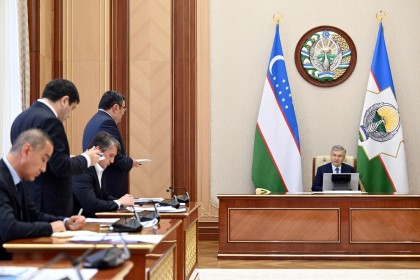
Uzbekistan remains steadfast in its goal to join the World Trade Organization by 2026. At a meeting on Wednesday, President Shavkat Mirziyoyev issued directives to ensure the "high-quality implementation of comprehensive measures aimed at securing full membership" in the WTO, prsesidential press service said.
While the accession process was originally targeted for completion by the WTO's 14th Ministerial Conference in March 2026, progress has faced hurdles. Azizbek Urunov, the President’s special representative for WTO issues and chief negotiator, previously noted that some countries have been slow to review documentation. Late last year, he warned of the risk of "unintentional delays" in the timeline.
The meeting highlighted that "significant results" were achieved through multilateral and bilateral negotiations in 2025. Two meetings of the Working Party on the Accession of Uzbekistan were held, during which the country addressed over 200 inquiries from WTO members and submitted more than 30 documents regarding foreign trade policies.
Furthermore, over 40 rounds of bilateral talks took place. The number of nations with which Uzbekistan has successfully concluded negotiations has reached 33. Last year alone, deals were finalized with 11 countries, leaving Taiwan as the only remaining party for negotiation as of earlier this year.
Over the past year, Uzbekistan has harmonized 68 legislative acts with WTO standards and international norms. Key reforms include streamlining intellectual property registration and toughening penalties for infringements. Additionally, export restrictions have been lifted, replaced by a transparent export duty mechanism, while the practice of setting minimum export prices for specific goods has been abolished.
Reportedly, significant progress was made in reducing technical barriers to trade and updating sanitary and phytosanitary (SPS) measures. Mandatory state registration for high-risk products has been replaced by a modern certification system, and food safety oversight has been consolidated under the Committee for Sanitary-Epidemiological Welfare and Public Health. Furthermore, 14 food-related technical regulations were repealed, and mandatory certification requirements were removed for 747 product categories—a 27% reduction in the total list.
Upcoming priorities include enacting new legislation on food safety and trade defense measures. The government also plans to implement advanced risk analysis, product traceability, and science-based protocols within the fields of sanitation, veterinary medicine, and plant quarantine.