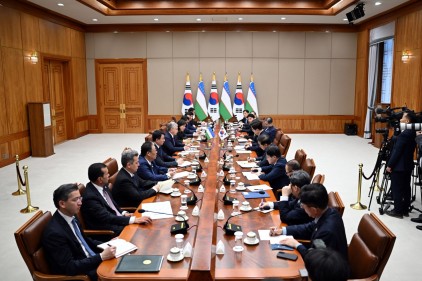
In Uzbekistan, tax exemptions previously established through bylaws but missing from the Tax Code will now be formally integrated into the Code. Aziz Umurzakov, a department director at the Tax Committee, announced this following the government meeting with the president on Tuesday.
He explained that, in practice, business owners often utilized exemptions granted via presidential decrees or government resolutions. However, because these rules were not explicitly written into the Tax Code, their application frequently led to disputes, legal battles, and unforeseen costs for entrepreneurs.
“A decision has been made to reflect all these exemptions within the Tax Code itself. In the meantime, taxpayers are granted the right to continue using these benefits even before the formal legislative amendments are finalized,” the Tax Committee representative stated in an interview with Uzbekistan 24.
The meeting also addressed the issue of public oversight regarding sales receipts. Currently, any individual who reports a business for failing to issue a receipt is eligible for a reward equal to 20% of the resulting fine.
“As it stands, if an individual notifies the tax authorities that a receipt was not issued, they are entitled to a payout of 20% of the fine collected,” Umurzakov said.
However, he noted that this mechanism is increasingly being exploited as a primary income stream rather than a tool for civic accountability.
“We must admit that cases are on the rise where certain individuals are using this not as a tool for public oversight, but as a steady source of revenue. For instance, a single person might intentionally file more than ten complaints against the same business in a single month,” he remarked.
The Tax Committee is proposing to uphold the public’s right to report violations while limiting the frequency of cash rewards. “Under the new rules, the right to notify tax authorities of infractions remains. However, if someone files more than two reports, they will be eligible for a payout no more than once a month,” Umurzakov stated.
The Business Ombudsman Abdumannon Buriev noted that two weeks ago, the president ordered a systemic review of issues weighing on entrepreneur morale and the business climate. Following this study, his office presented 15 systemic concerns. “Each issue was examined in detail. We expect this to have a positive impact on business confidence, as the majority of these proposals received presidential support,” he said.
As a result of the presidential meeting, several key measures were approved: a delay in implementing "aggregation" for digital marking of water and soft drinks, a reduction in marking-related fines - including fixed penalties for retail and food services—and a simplified 40% VAT refund for cafes and restaurants, regardless of their share of cashless sales.
Additionally, plans are in place to overhaul regulations for signage and outdoor advertising, eliminate commissions on transfers between a user’s own cards, introduce a moratorium on certain business fines, and ease environmental impact assessments and compensation payments for specific commercial facilities.
Follow us on: