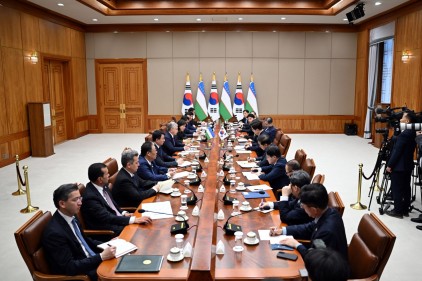
Uzbekistan is set to implement additional steps to expand private sector involvement in healthcare. The topic was discussed at a government meeting chaired by the president on May 1st.
Among the key initiatives, $200 million in subsidized loans will be directed toward opening new clinics — including in remote regions — so that residents can receive qualified medical care close to home, rather than having to travel to Tashkent or regional centers. This was reported by the Uzbekistan 24 television channel.
The credit line will be established by the National Bank of Uzbekistan. Funds will be issued in the national currency for terms of up to 10 years, with a three-year grace period. A single project may receive the equivalent of up to $10 million. The interest rate on these loans will be set at 3 percentage points above the Central Bank's base rate.
In addition, entrepreneurs who open clinics will be eligible for a loan subsidy covering 50% of the interest rate, funded through the Entrepreneurship Development Company.
Special incentives have also been introduced to attract foreign specialists — including doctors, managers, consultants, and technical staff. Until May 1, 2029, they will be subject to a social tax rate of just 1%. The fee for obtaining a work permit in Uzbekistan will be set at one base calculated value (412,000 soums).
Customs preferences for importing modern medical equipment and components for the private sector have likewise been extended through 2029.
Following the presentation, the president signed the Additional Steps to Improve the Quality of Medical Services Decree.
Furthermore, starting July 1, 2026, private medical organizations will be permitted to provide medical services funded through the state budget across all areas covered by their existing licenses — drawing on resources from the State Medical Insurance Fund.
From May 1, 2027, privately accredited institutions — whether holding national or international accreditation — will be authorized to perform transplantation procedures.
The question of granting private clinics the right to conduct organ transplants had first been raised at an open business dialogue in July 2025. At that time, the rector of Central Asian Medical University, Nurillo Mamasadikov, noted that the number of patients traveling abroad for such operations had been growing in recent years — a trend that the Ministry of Health also acknowledged.