During a meeting on April 28, President Shavkat Mirziyoyev approved a proposal to repurpose 7,400 hectares of land in the Fergana province, shifting away from cotton and grain in favor of more profitable crops.
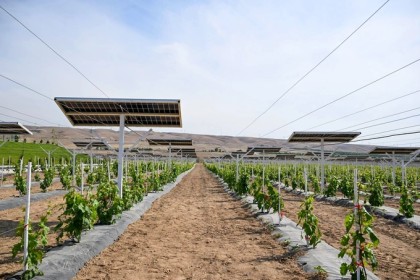
According to the briefing, portions of land in the Fergana, Yazyavan, Kuva, and Uzbekistan districts will be converted into orchards and export-oriented plantations. Specifically, 4,400 hectares in the Fergana and Uzbekistan districts will be dedicated to apricots, plums, almonds, and raspberries. In Kuva, 1,200 hectares will be planted with export-grade cherries, while Yazyavan will see 1,800 hectares of high-yield, drought-resistant rice.
The president noted that this shift creates the capacity to produce an additional 300,000 tons of fruit and vegetables, generating an estimated 2 trillion soums in added value.
He also highlighted significant untapped potential in the province: out of 370,000 hectares of irrigated land, 5,500 hectares of orchards and vineyards are past their prime, while another 6,000 hectares of steppe and foothills remain vacant.
Emphasizing the need for modernization, the head of state ordered a complete overhaul of aging orchards and the implementation of advanced agricultural technologies. This includes adopting cooperative models based on major agricultural hubs, such as Quva Agrostar.
Authorities have been instructed to establish a dedicated rice-growing academy in the Yazyavan district and launch a pilot project to cultivate organic rice across 100 hectares of wetlands.
President Mirziyoyev also highlighted critical gaps in cold storage infrastructure. In the Fergana district, over 5,000 households specialize in raspberry farming; however, the lack of local storage facilities forces these farmers to sell their harvests at heavily discounted prices. The meeting underscored the urgency of this issue: if raspberries are not sold within two to three days, their market value plummets by up to 80%. To combat this, the government has ordered the construction of small-scale refrigerated warehouses (with capacities of 50–100 tons) in 10 local neighborhoods, which will be provided to farmers through favorable leasing programs.
In the cotton sector, preparations are underway to implement high-density planting across 888,000 hectares. Of this area, 500,000 hectares will be sown with high-yield, salt-tolerant, and drought-resistant international varieties. Furthermore, 300,000 hectares will be managed using advanced cultivation techniques modeled after successful practices in Xinjiang.
The landscape of Uzbek agriculture has shifted dramatically over the last decade. In 2016, cotton fields covered 1.28 million hectares; since then, the President has consistently ordered reductions in cotton and grain acreage during his provincial tours. Current data from the Ministry of Agriculture confirms that cotton fields now occupy 888,000 hectares - representing a 30.4% decrease in land use for this crop over ten years.