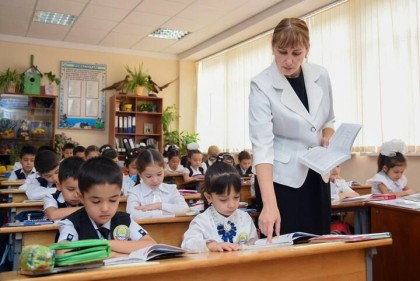
In recent years, Uzbekistan's schools have seen a decline in the number of classrooms with more than 35 students. However, 5.2% of classrooms — some 13,500 out of a total of 259,636 — still exceed that threshold. At a press conference on April 21, senior officials from the Ministry of Preschool and School Education outlined their plans for addressing the shortage of school places.
"We have set ourselves the goal of ensuring that all schools operate on a single shift — there are 10,193 public schools in the country," said First Deputy Minister Sherzod Karimov. "Only then will it be possible to run a wide range of subject-based and sports clubs, so that children can spend their time meaningfully without having to leave school. We are working on this together with local district administrations and other ministries."
Deputy Minister Temurjon Komilov added that achieving a full transition to single-shift schooling and organizing extracurricular activities would require a minimum of 850,000 additional places.
"That's not something that can be built in two or three years. Across all funding sources combined, around 200,000 places are created each year. The cost of setting up a single classroom — factoring in teachers, equipment, and other expenses — ranges from 120 to 160 million soums," he explained.
To reduce classroom overcrowding, the Ministry regularly submits proposals for the construction of additional buildings at existing schools and the development of entirely new ones, noted Sherzod Karimov. At the same time, he pointed out that not every available plot of land on school grounds can accommodate new buildings — evacuation requirements in emergencies and other safety regulations must also be taken into account.
Each year, when planning new residential developments, the Ministry proposes a school construction standard of 1.5 student places per apartment unit, he continued.
"For example, when the Karasu residential district in Samarkand was being built, plots were set aside for schools in advance. Given the pace at which people are moving into that area, new schools are now being built there — so for developments like that, school capacity is currently sufficient," the First Deputy Minister noted.
Follow us on: