On April 7, the Senate approved a landmark BIll titled "On the Compensation of Damages Caused by Illegal Decisions, Actions, or Inactions of State Bodies or Their Officials."
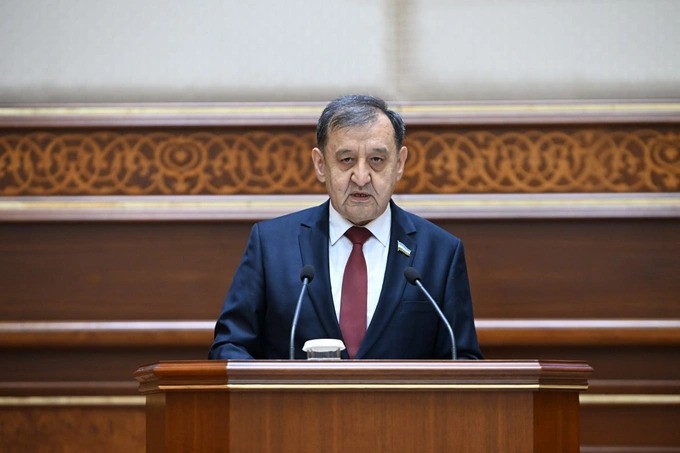
Presenting the bill, Senator Abdulkhakim Eshmuratov emphasized that the document establishes a systematic framework for compensating both citizens and legal entities. Currently, these regulations are fragmented across more than ten different laws, presidential acts, and government resolutions, resulting in the lack of a unified, budget-backed payment mechanism.
The senator also highlighted existing Provincial disparities: while damages in Tashkent are covered by specialized funds, Provincial claims currently rely on local budgets. Furthermore, current legislation lacks clear protocols for recourse claims—the process by which the state recovers paid compensation from the specific officials responsible for the harm.
The bill codifies essential legal terms, including "compensation for harm," "moral and material damages," and "territorial compensation funds." It is built upon the principles of the rule of law, the primacy of human rights, transparency, and the prevention of conflicts of interest. To ensure accountability, the law mandates the creation of Territorial Compensation Funds overseen by supervisory boards, which will hold the authority to approve all payouts.
Under the new bill, the exact amount of compensation will be determined by courts and disbursed in monetary form. A key feature of the legislation is the introduction of a right of recourse: once the state compensates a victim, it retains the right to seek reimbursement from the specific official whose actions caused the damage.
The bill has also proposed a rigorous oversight and reporting system. Provincial governors and the Council of Ministers of Karakalpakstan will be required to submit annual reports to local councils. Furthermore, all expenditures related to these payouts will be transparently detailed in the national budget execution reports.
To protect claimants, the law explicitly guarantees the right to appeal decisions made by supervisory boards in court. Crucially, it mandates that any legal ambiguities or "gray areas" in this field must be interpreted in favor of citizens and businesses.
The scope of this reform is comprehensive, necessitating amendments to several key legal frameworks, including the Civil, Criminal Procedural, and Economic Procedural Codes, as well as regulations governing the enforcement of judicial acts and the compulsory acquisition of land for public needs.
Senator Eshmuratov noted that the bill was informed by a comparative analysis of international legal practices from the United States, China, South Korea, Russia, Latvia, Lithuania, and others. "The adoption of this law will secure the constitutional right of our citizens to receive restitution for harm caused by the unlawful actions or negligence of state bodies," the Senator stated. "It also ensures that the responsible officials are held accountable under the law."
Follow us on: