Today, the Senate approved a new edition of the Automobile Roads Law, marking a significant step toward modernizing the nation's transport infrastructure.
The senator/chairperson of the Defense and Security Committee Kutbidin Burkhanov noted that the new law provides clear, statutory definitions for the first time for essential industry terms—including road reconstruction, maintenance, and repair, as well as defining road owners, specialized organizations, roadside infrastructure, toll roads, operators, and toll collection points. This clarity is intended to eliminate legal ambiguities and regulatory gaps within the sector.
The law anchors the industry in several core principles: all roadwork must be strictly lawful, projects must be designed based on rigorous scientific data, and decision-making must remain transparent. Furthermore, the legislation mandates strict adherence to traffic safety and environmental standards, while guaranteeing equal and convenient access to road infrastructure for all citizens.
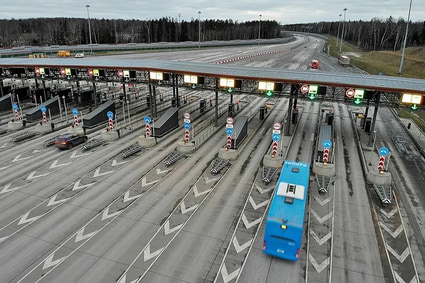
A headline feature of the new law is the formalization of toll roads. Crucially, the legislation introduces a "principle of fairness": toll routes may only be established where a free alternative exists, ensuring that the final choice of route always rests with the driver.
The document also provides a detailed blueprint for the functioning of these roads—covering everything from financing via public-private partnerships (PPP) to the implementation of automated toll collection and the regulation of legal relationships between operators and road users. This shift is expected to catalyze private investment, alleviate pressure on the state budget, and significantly enhance the overall quality of the national road network.
Furthermore, the law prohibits the installation of unauthorized physical barriers or artificial road bumps. The movement of heavy-duty and oversized vehicles will now be strictly regulated, requiring special permits. These measures are specifically designed to preserve the integrity of the road surface, reduce accident rates, and, ultimately, protect human lives, Senator Burkhanov explained.
In drafting the legislation, policymakers conducted a comparative analysis of international best practices, drawing on the legal frameworks and infrastructure experiences of Kazakhstan, South Korea, China, France, and Italy.
The law also introduces a comprehensive road activity planning system. This includes the creation of barrier-free environments, a strategic priority on pedestrian safety, and the development of modern roadside infrastructure that meets international benchmarks. Environmental protection and the inclusion of local community feedback during project implementation are also codified as essential requirements.
The financing model for road design, construction, and reconstruction is shifting toward a diversified approach. Beyond state budgetary allocations, the law actively encourages the influx of private capital through public-private partnership (PPP) frameworks. Additionally, the legislation formalizes long-term maintenance protocols to ensure the sustainable upkeep and longevity of the national road network.
Follow us on: