Sanctions pressure on Russia has impacted Rosatom State Corporation projects but has not halted their implementation, CEO Alexey Likhachev told reporters on March 24.
"Over the past two years, sanctions have certainly exerted some pressure, but they haven’t brought any projects to a point of hopelessness. Projects are moving forward everywhere," he noted, responding to a question about whether key elements of the future nuclear power plant (NPP) in Uzbekistan have been localized and if new restrictions could affect its construction.
According to Likhachev, a key factor in resilience is the involvement of local companies. "In terms of project stability and resilience to external factors, including sanctions, the more local companies are involved, the higher that stability becomes. This has been proven in practice wherever we operate," he emphasized.
He added that projects continue to move forward in various countries despite external constraints. "We are heading toward startup operations this year at units in Bangladesh, Turkey, and China. Overall, projects are systematically developing in other countries as well," the head of Rosatom stated.
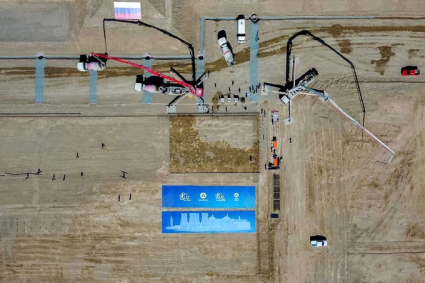
In December 2025, Pavel Bezrukov, Vice President and Director of the Uzbekistan NPP construction project at Atomstroyexport, commented on the potential introduction of sanctions against Rosatom and their impact on the project in the Jizzakh province, where the Russian state corporation serves as the general contractor.
"First of all, we have been under sanctions for a very long time—not Rosatom specifically, but the country at least. Rosatom has already localized all critical elements of the plant, so [the imposition of sanctions] will not reflect on the nuclear plant or its construction in any way," he replied.
U.S. and EU sanctions on Russia have influenced some of Rosatom's overseas projects. The Akkuyu NPP project in Turkey is ongoing but facing delays; the launch of the first power unit was moved from 2023 to 2026. Reasons include issues with the delivery of Western equipment (including from Siemens Energy) and banking transactions amid sanctions against the Russian financial sector.
The Paks-2 project in Hungary is under pressure from EU regulators. In September 2025, the EU Court overturned the European Commission's decision to approve state support, creating additional legal hurdles for its implementation.