Tashkent has been recognized as one of the fastest-changing cities in the world, according to a major new study by the Boston Consulting Group (BCG), the international management consulting firm. The Uzbek capital earned a top-tier position in the "speed of change" category, outpacing a number of the world's major urban centers.
BCG's study, titled Built to Change: How Cities Compete for the Future, ranked cities across five dimensions: speed of change, economic opportunities, livability, social capital, and engagement with government.
In the speed-of-change dimension, the top ten is dominated by Middle Eastern and Chinese cities, reflecting the fast pace of comprehensive transformation those countries have been pursuing. Shenzhen leads the way, followed by Riyadh, Tashkent, and Doha. The result places the Uzbek capital ahead of many larger and wealthier cities worldwide, and signals that the sweeping reforms and modernization efforts undertaken in recent years are earning recognition on the global stage.
The report's authors point to several key drivers behind Tashkent's strong showing. In the speed-of-change-in-economic-activities subcategory, Tashkent leads the way, with the top ten cities overall witnessing real annual income growth of around 3% on average and unemployment rates falling by 5% on average. Researchers also highlighted the rapid expansion of digital government services and improvements in how residents interact with public institutions as significant contributing factors.
In the broader socioeconomic group ranking, Tashkent leads in speed of change among "developing middleweights," and its score puts it in the top five across the full 80-city ranking — reflecting rapid gains in economic opportunities and engagement with government.
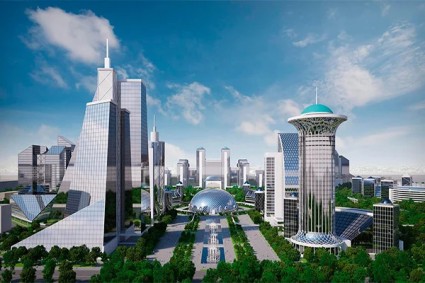
On the ground, these shifts are visible across the capital. Recent years have seen major investments in transport infrastructure, the construction of new residential districts and public spaces, the wide-scale rollout of digital government services, and concerted efforts to improve the investment climate — all of which appear to be registering in the perceptions of Tashkent's residents.
BCG's research found that a city's lasting competitive advantage lies in its speed of change — how quickly it learns, adapts, and keeps improving what people experience — and that this pace builds advocacy, the quiet proof that people choose to come, choose to stay, and choose to recommend the city to others.
Experts say that rankings of this kind reflect a broader shift in Tashkent's standing as an economic and urban development hub in the region. As international assessments increasingly capture the momentum behind the city's transformation, Uzbekistan's capital is positioning itself as one of Central Asia's most dynamic urban centers.
Stay up to date with all the latest news: