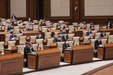
On June 10, President Shavkat Mirziyoyev reviewed a presentation focused on boosting the efficiency of ongoing urbanization and urban planning reforms, the presidential press service said.
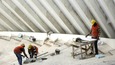
The presentation specifically addressed the need to enforce stricter accountability for violations in the urban planning sector. Officials noted that persistent issues continue to plague the country, including illegal and unauthorized construction, artificial delays in project completion timelines, and the inefficient use of land plots.
Authorities pointed out that current fines lack a sufficient deterrent effect, noting that 1,952 illegal structures were detected in 2025 alone. Consequently, a proposal has been put forward to increase financial sanctions for these violations.
During the meeting, it was highlighted that Uzbekistan's urban population has recently surpassed 50% and is projected to keep climbing. This rapid population growth and accelerating pace of construction make it increasingly urgent to develop urban plans that meet modern standards, preserve green zones, protect historical and cultural heritage, and ensure the synchronized expansion of utility and transport infrastructure.
Currently, out of the country's 8,604 settlements, only 2,506 (or 29%) are covered by general master plans. The government plans to develop master plans for an additional 154 settlements in 2026, and 144 more in 2027. Of the existing general plans, 1,044 have already been converted into a digital format.
However, while 275 localized master plans were developed for specific territories between 2024 and 2025, there is currently no unified tracking system for them, and they remain disconnected from the broader general master plans. This fragmentation creates significant hurdles for comprehensive regional development, particularly when planning infrastructure, public transit, utility networks, and social facilities.
To address these challenges, a new management system for general and localized master plans has been proposed. The rollout will follow a four-stage process: first, completely gathering and updating all master plan data; second, digitizing this information; third, establishing active monitoring; and fourth, building a comprehensive information-analytical system.
As part of this initiative, a unified electronic registry for all urban planning documentation will be launched. Moving forward, any planning documents that fail to register through this system will hold no legal validity.
Furthermore, a proposal was made to establish "creative parks" in every region of the country, serving as hubs that bring together urban planning, design, and architecture. These parks will feature laboratories, design workshops, software and engineering services, as well as dedicated spaces for onboarding, networking, and coworking.
Residents of these creative parks will be eligible for personal income tax and social tax incentives.
Digitization of Construction
The presentation also focused heavily on the digitization of construction workflows. Currently, data for a single construction project is scattered across multiple information systems. Due to a lack of integration among platforms such as UzKad, E-auksion, E-qaror, Shaffof qurilish, and Mening uyim, crucial data regarding land plots, design documentation, expert reviews, building permits, and commissioning remain fragmented.
To address this issue, it has been proposed to introduce a unified identifier system into construction processes, which will include a digital territory passport, a digital project passport, and a digital asset passport.
This initiative is expected to bring the entire lifecycle of a building into a single digital ecosystem—covering everything from the initial land plot and design documentation to permits, actual construction, and final commissioning.
Minister of Justice Akbar Tashkulov announced that the president recently signed the law on urban renovation into effect. The document regulates the modernization of aging housing stock, the delineation of renovation zones, resident consent protocols, and compensation and relocation mechanisms. Under this framework, 17,000 two- and three-story apartment buildings constructed before 1991 could be replaced by modern high-rises.
Additionally, a draft bill on equity-shared construction (off-plan property purchases) was presented to the head of state. The bill aims to protect home buyers' funds and increase transparency in construction financing. This measure comes in response to data showing that last year alone, nearly 3,000 citizens suffered financial losses totaling 668 billion soums due to construction fraud and delays.
Stay up to date with all the latest news: